
Microdosing vs. High-Dose Research
Quick Summary
A recent RAND study shows that millions of adults are microdosing psilocybin, a trend that accounts for nearly half of all psilocybin use days. However, formal scientific research, like that at Johns Hopkins, is almost exclusively focused on high-dose, therapeutically-guided sessions for treating conditions like depression. This article explores the reasons for this disconnect, the public health implications, and what it means for the future of psilocybin research.

A recent report from the RAND corporation brought a fascinating user trend into sharp focus: millions of adults are microdosing. The 2026 study estimates that of the millions who used psilocybin in the past year, roughly two-thirds reported microdosing, and these small doses accounted for nearly half of all psilocybin use days. This stands in stark contrast to the landscape of formal scientific and medical research, which remains almost exclusively focused on high-dose, therapeutically-guided sessions.
This creates a significant disconnect. Consumers are embracing sub-perceptual, routine psilocybin use on a massive scale, while the institutions studying the compound are primarily investigating its effects in large, single doses designed to induce profound psychedelic experiences. If microdosing is so prevalent, why isn't it the main subject of clinical trials?
What Does "Microdosing" Mean in the Real World?
In the context of real-world use, microdosing refers to the practice of taking a sub-perceptual dose of a psychedelic substance. The goal is not to "trip" or experience significant alterations in consciousness, but to achieve subtle positive effects on mood, creativity, or focus. A typical microdose is roughly 1/10th of a full recreational dose, often taken according to a specific schedule or protocol.
There is no universally agreed-upon standard for what constitutes a microdose, a point highlighted in the RAND research. The amount can vary based on individual sensitivity, product potency, and desired outcome. Common approaches, often shared within user communities, include:
- The Fadiman Protocol: One day on, two days off, to prevent tolerance.
- The Stamets Stack: Combining psilocybin with Lion's Mane mushroom and Niacin, intended to support cognitive and neurological health.
- Intuitive Dosing: A more unstructured approach where users take a microdose as they feel it is needed.
This user-led exploration contrasts sharply with doses used in clinical settings, which are carefully calculated based on body weight to reliably produce a powerful psychedelic experience. You can learn more about the nuances of this practice in our post, What Defines a "Sub-Perceptual" Microdose?.
Why Is Clinical Research Focused on High Doses?
The scientific and medical communities have valid reasons for prioritizing high-dose research. The current model, exemplified by institutions like the Johns Hopkins Center for Psychedelic and Consciousness Research, treats psilocybin as a catalyst for a therapeutic process. The primary hypothesis is that the profound, or "peak," mystical experience induced by a large dose can reset brain patterns and create a powerful window for psychological insight and change.
This approach offers several advantages from a research perspective:
- Clear, Measurable Effects: A high-dose session produces dramatic, undeniable effects that can be more easily quantified and compared to a placebo. Studying the subtle, long-term effects of microdosing is far more complex and susceptible to the placebo effect.
- Therapeutic Framework: High-dose psilocybin is being studied as an adjunct to therapy for specific, severe conditions like Major Depressive Disorder (MDD) and end-of-life anxiety. The goal is a therapeutic breakthrough, not a daily supplement.
- Logistical Feasibility: Running a study that involves one or two high-dose sessions is logistically simpler than a multi-month trial tracking daily microdoses and countless lifestyle variables.
The entire paradigm of Clinical Research vs. Real-World Use is built around this high-impact, professionally-guided model, which is the most direct path toward potential regulatory approval as a prescription treatment.
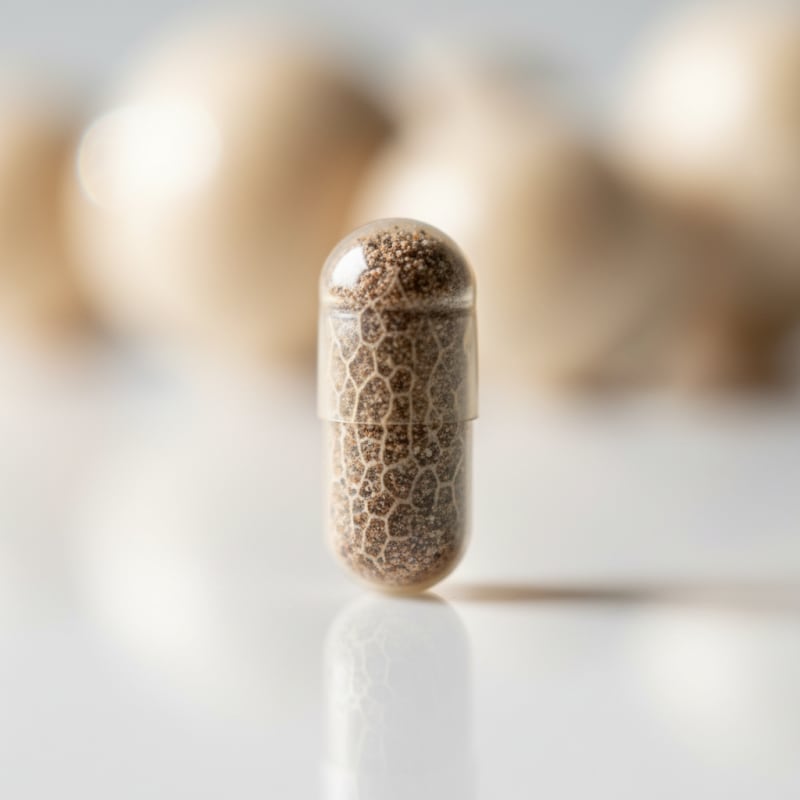
For those prioritizing consistency for their own protocols, our Foundation Microdose Capsules offer precisely measured doses of ground *Psilocybe cubensis, which is ideal for structured microdosing schedules.
What Are the Implications of This Disconnect?
The gap between widespread microdosing and targeted high-dose research leaves millions of users navigating an unguided space. Without clinical data to establish safety, efficacy, or standardized dosages, consumers are left to rely on anecdotal reports and their own judgment. This is the "alarming trend" that some public health commentators point to—not necessarily because microdosing is inherently dangerous, but because it is happening on a massive scale in a data vacuum.
This situation places immense importance on product quality and reliability. When the practice itself is not clinically validated, the baseline for responsible use becomes the integrity of the product. Consumers who choose to microdose must have confidence in:
- Dosing Accuracy: Knowing that a "100mg" capsule actually contains 100mg of homogenized mushroom material is critical for a consistent, sub-perceptual experience.
- Purity and Safety: Assurance that products are free from contaminants is a fundamental safety requirement.
- Potency Information: Understanding the psilocybin content of the raw material allows for predictable and repeatable experiences.
A popular combination for those interested in cognitive-focused protocols is the "Stamets Stack." Our Focus Lion's Mane & Psilocybin Capsules are formulated to reflect this approach, blending psilocybin with high-quality Lion's Mane extract and Niacin.
Will the Scientific Focus Ever Shift?
It is unlikely that the primary focus of pharmaceutical-track research will pivot away from high-dose therapy in the near future. The financial investment and regulatory pathways are built around the model of treating specific, diagnosed illnesses with a powerful, professionally administered intervention. However, the sheer scale of public interest, as quantified by the RAND study, is creating pressure for a secondary research track to emerge.
As more data highlights just how common microdosing is, it will become harder for the scientific community to ignore. Independent research and academic surveys are beginning to scratch the surface, but they face significant hurdles in funding and methodology. For now, the reasons Why Science Overlooks Microdosing remain largely intact.
Currently, the world of psilocybin exists on two parallel tracks: a rapidly growing real-world culture of microdosing and a methodical, clinical science focused on high-dose therapy. The bridge between these two worlds is still under construction.

ShroomDash Editorial Team
Published 2026-03-05 · 4 min read read · Dosing