Psilocybin Use: The Data vs. The Narrative
Quick Summary
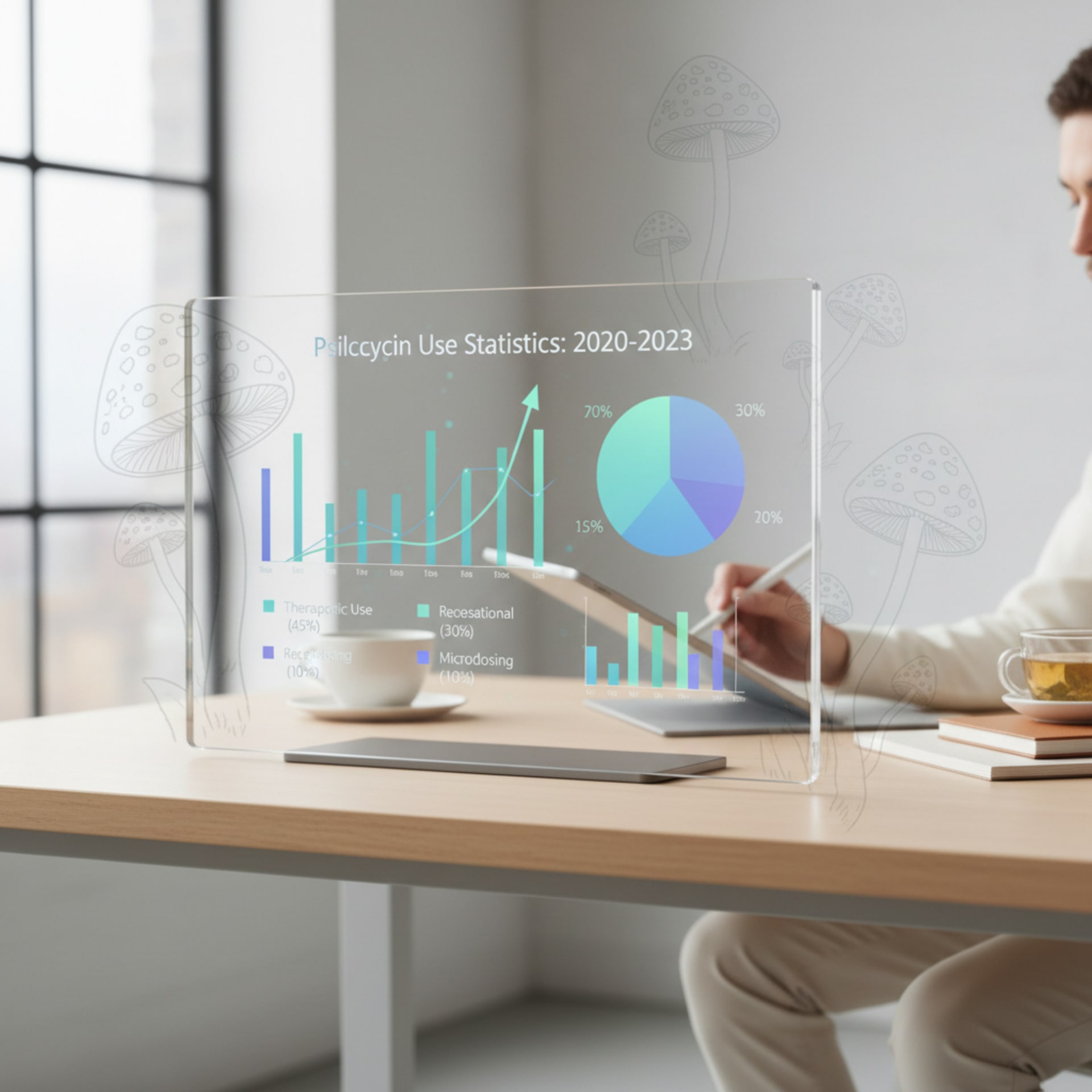
Recent survey data shows that microdosing is the most common form of psilocybin use, with nearly half of all use-days involving small, sub-perceptual doses. This contrasts sharply with the media and clinical narrative, which focuses on high-dose "trip" experiences for treating specific disorders. The reality is that millions use psilocybin as a regular wellness tool for mood, creativity, and anxiety.

Recent studies are beginning to quantify what many already suspected: the most common form of psilocybin use is not the high-dose, reality-bending trip often depicted in media. Instead, it’s microdosing—the practice of taking a sub-perceptual dose for subtle, therapeutic, or performance-enhancing effects. A landmark 2026 RAND study has provided the clearest picture yet, revealing a significant disconnect between the public narrative surrounding psilocybin and the reality of its day-to-day use.
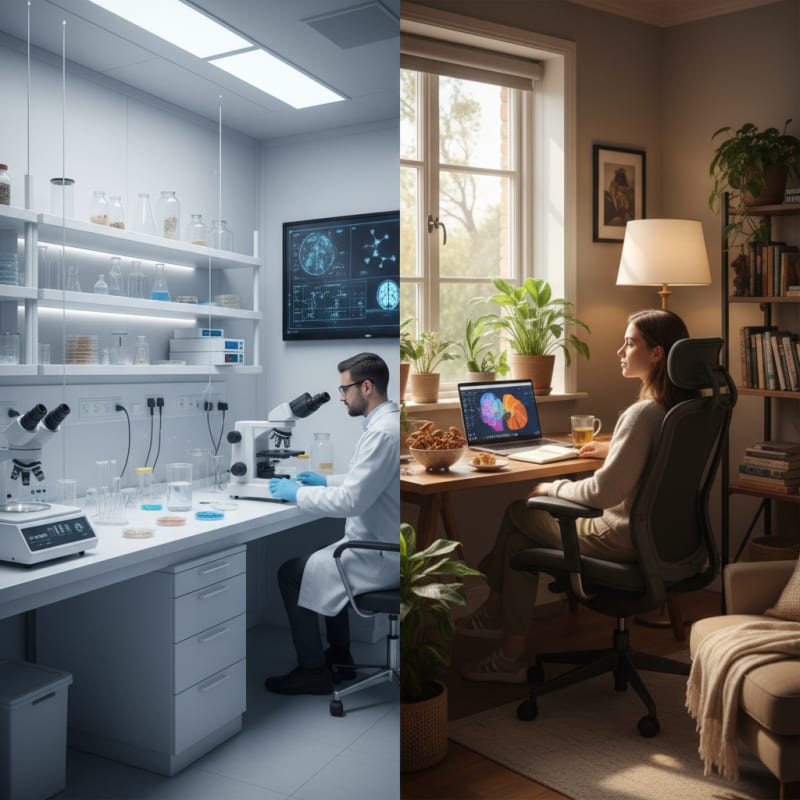
The emerging data shows that for every person seeking a profound psychedelic journey in a clinical setting, there are many more integrating small, regular doses into their wellness routines. This distinction isn’t just academic; it highlights two parallel worlds of psilocybin use that are evolving independently but are often conflated in public discussion.
What Does the New Data Actually Show?
The RAND study, a first-of-its-kind survey on psychedelic use, delivered some eye-opening statistics. It found that among U.S. adults who used psilocybin in the past year, roughly two-thirds reported microdosing at least once. Even more telling is the volume of use: of the more than 200 million days of psilocybin use reported, nearly half involved microdosing.
This fundamentally challenges the perception of psilocybin as a substance used exclusively for occasional, high-impact experiences. The data suggests that for a majority of users, psilocybin is a tool for ongoing wellness management rather than a tool for profound, infrequent psychological exploration. Key motivators for microdosing cited in research include:
Managing symptoms of anxiety and depression Improving mood and overall well-being Enhancing creativity and focus Reducing reliance on other substances
These goals are distinct from the objectives of high-dose psychedelic-assisted therapy, which is often aimed at treating severe, specific conditions like major depressive disorder or PTSD. The data confirms that real-world application is geared more towards subtle, daily optimization.
Why is the Public Narrative so Different?
The dominant narrative is largely shaped by the high-profile clinical research coming from institutions like the Johns Hopkins Center for Psychedelic and Consciousness Research. This work is vital and has been instrumental in psilocybin's destigmatization. It focuses on using high doses of psilocybin in medically supervised, therapeutically-guided sessions. The results, particularly for conditions like treatment-resistant depression and addiction, have been groundbreaking and, consequently, have captured media attention.
However, this clinical model represents a tiny fraction of total psilocybin use. It is expensive, requires a significant time commitment, and is only accessible to participants in a limited number of studies. While it provides a powerful proof-of-concept for psilocybin's therapeutic potential, it does not reflect how millions are accessing and using it on their own terms. The wellness model, driven by individual users, is far more widespread and accessible, as explored in articles like Microdosing: Real-World Use vs. Research.
What is Driving Widespread Microdosing?
The grassroots adoption of microdosing is driven by its accessibility and perceived benefits for everyday life. Users are not seeking mystical experiences but rather incremental improvements in their mental and emotional state. This model of use prioritizes consistency and precision, which is why standardized products have become popular. For many, the ability to take a predictable, low dose is essential.
Products like Core Microdose Capsules are designed for this exact purpose. Containing a precise, small amount of psilocybin, they offer a straightforward way to integrate the practice into a daily or weekly routine without the uncertainty of measuring raw mushroom material. This convenience is a major factor in the widespread adoption of microdosing, removing barriers and making it approachable for a broader audience exploring the full range of psilocybin products.
For those looking to target specific cognitive benefits, formulations like Focus Microdose Capsules, which may be blended with other non-psychoactive functional mushrooms and adaptogens, align directly with user goals like enhanced creativity and productivity. This demonstrates a market that is maturely responding to the specific needs of the wellness-oriented user, not the clinical patient.
How Do We Reconcile These Two Worlds?
The clinical and wellness models of psilocybin use should not be seen as being in opposition. They are two sides of the same coin, each validating the other. Clinical research provides the scientific backbone, establishing safety and efficacy under controlled conditions. This research gives credibility to the compound and fuels public and regulatory acceptance.
At the same time, the widespread, real-world data from millions of microdosers provides invaluable insight into long-term use patterns, desired outcomes, and the substance's versatility. This grassroots movement demonstrates a clear demand for accessible, low-dose psilocybin products for wellness. It pushes the conversation beyond the clinic and into the realm of daily life, where most of the use is actually happening.
The data from the RAND study is not an indictment of clinical research but a clarification of the landscape. It shows that while researchers are carefully studying the effects of a handful of high-dose experiences, millions of people are quietly conducting their own informal experiments with low doses, representing the largest bloc of psilocybin use days.
It is a factual observation that the narrative is slowly catching up to the data. The numbers indicate that psilocybin's primary role in society today is as a self-managed wellness tool, taken in small, consistent amounts.

ShroomDash Editorial Team
Published 2026-04-16 · 4 min read read · Dosing