Psilocybe vs. Amanita: Not the Same Fungi
Quick Summary
Recent surveys show many people use Amanita muscaria mushrooms, but they are fundamentally different from psilocybin-containing mushrooms. Amanita works on the brain's GABA system causing sedative and dream-like effects, while psilocybin works on the serotonin system, producing classic psychedelic effects. Understanding this distinction is crucial for safe and predictable experiences.
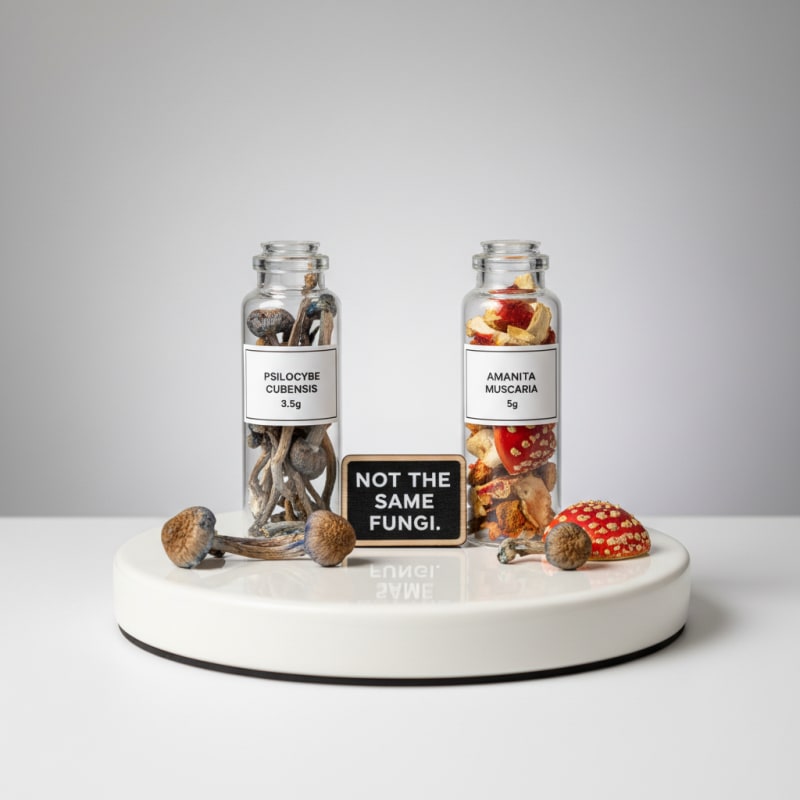
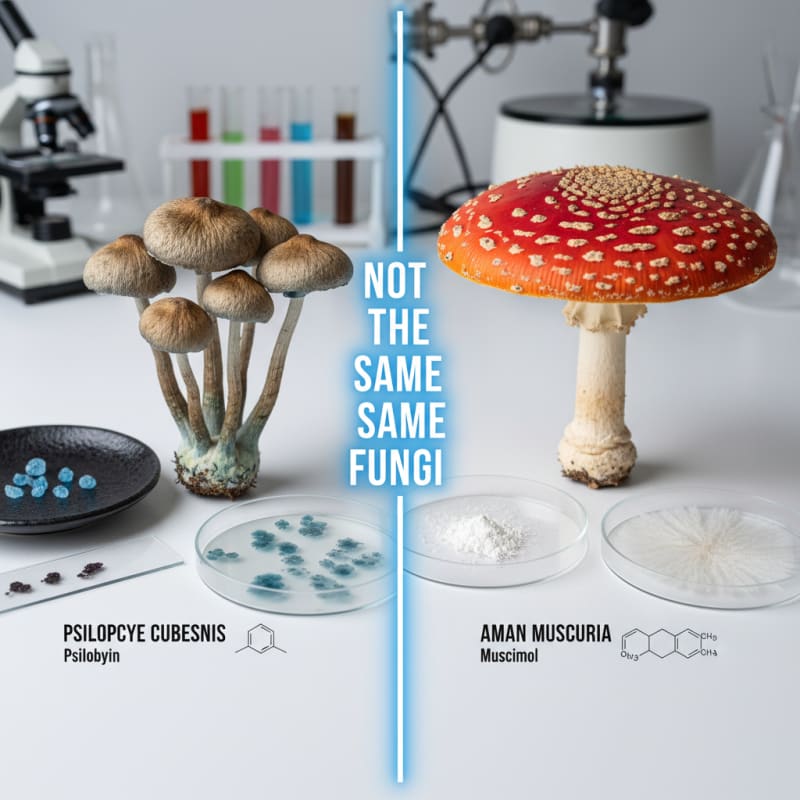
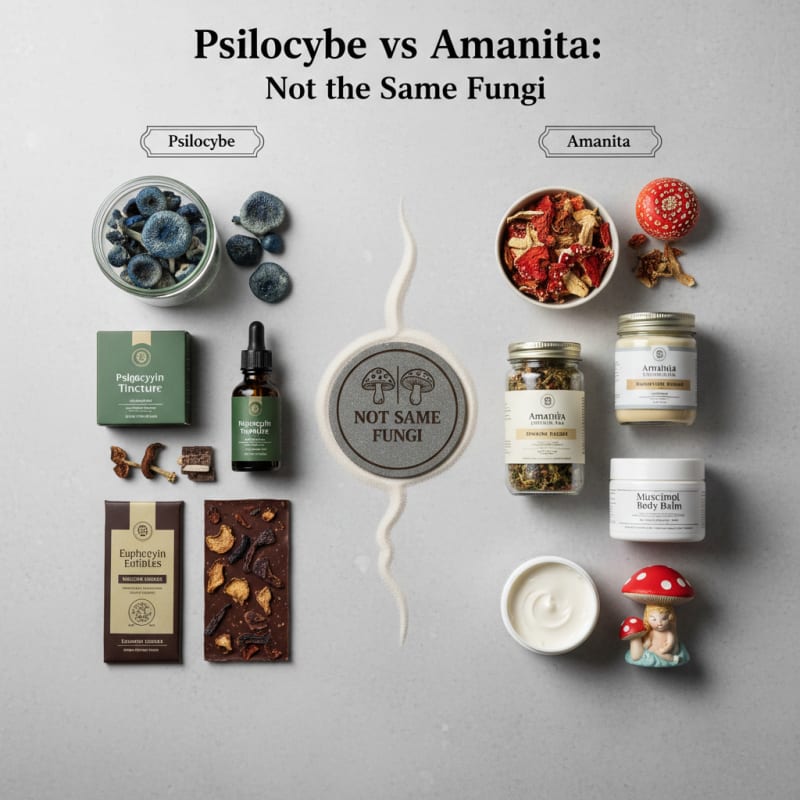
A 2025 RAND survey on psychedelic use in the United States revealed a surprising data point: behind psilocybin and MDMA, the third most commonly used psychedelic substance was Amanita muscaria. For those unfamiliar with the nuances of mycology, this might seem like a minor detail. However, lumping Amanita muscaria in with psilocybin-containing mushrooms is a fundamental error. The two are profoundly different, from their core chemistry to their effect on human consciousness. Understanding this distinction is not just academic—it's essential for harm reduction and informed use. While both are fungi that can alter perception, they operate via completely different neurological pathways and produce markedly different experiences.
Recent data suggests that of the millions of US adults who used psilocybin in the last year, a significant portion was for microdosing. This trend towards intentional, sub-perceptual use highlights a user base that is increasingly focused on predictable and manageable outcomes. It's within this context that the rise of a less understood fungus like *Amanita muscaria warrants a closer look, especially as its legal status often makes it more accessible than psilocybin. The assumption that all "magic mushrooms" are the same is a significant misconception that can lead to unexpected and potentially undesirable effects.
What are the Active Compounds in Each Mushroom?
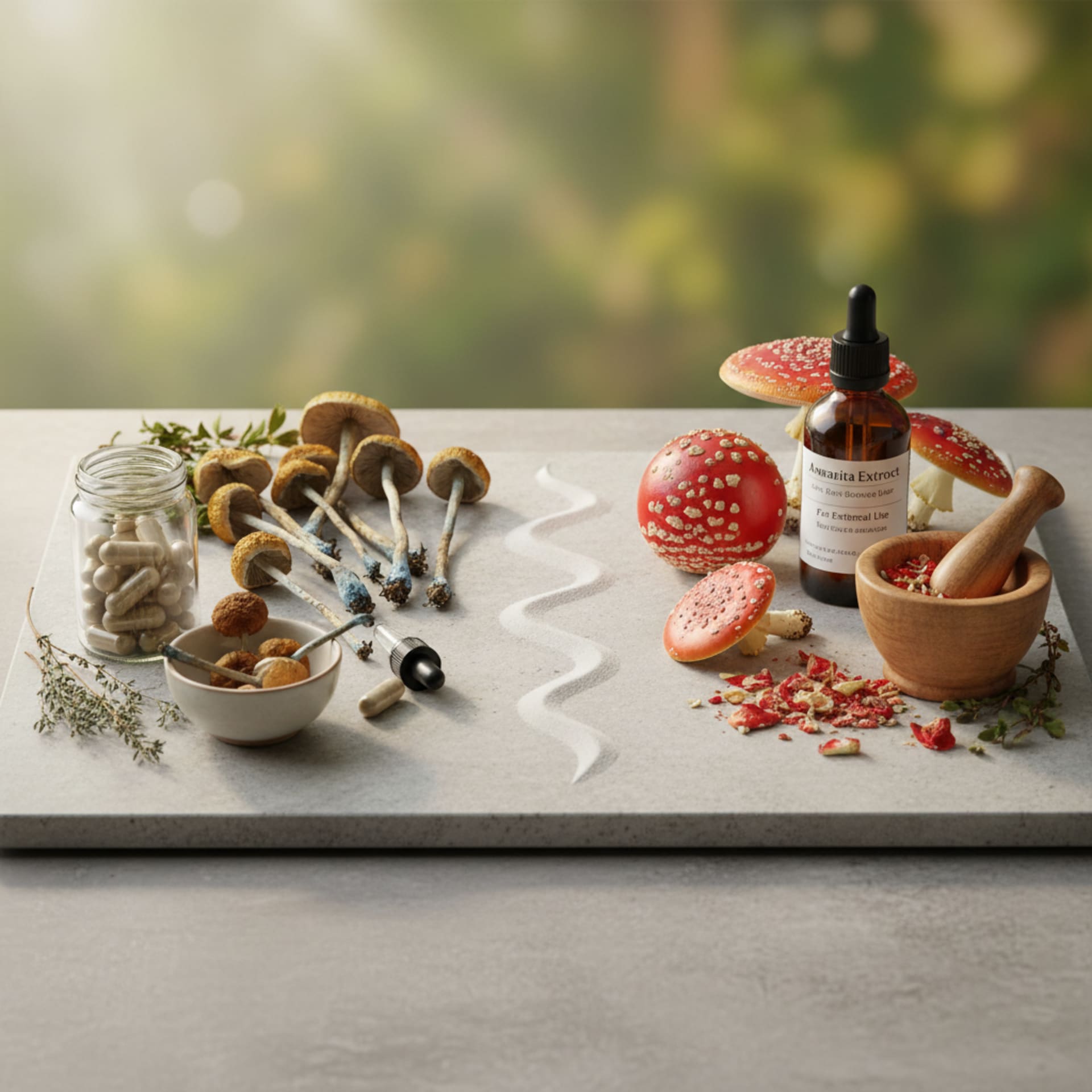
The primary difference between Psilocybe species and Amanita muscaria lies in their active ingredients. *Psilocybe cubensis, the most common species of psilocybin mushroom, contains psilocybin and psilocin. When ingested, psilocybin is converted by the body into psilocin, the compound that is primarily responsible for the mushroom's psychoactive effects. As explored in our post on the difference between psilocybin and psilocin, psilocin's chemical structure is very similar to serotonin, a key neurotransmitter.
*Amanita muscaria, on the other hand, contains no psilocybin or psilocin. Its principal psychoactive compounds are ibotenic acid and muscimol.
- Ibotenic Acid: This compound is a neurotoxin that acts as a potent agonist of NMDA glutamate receptors. When the mushroom is dried or heated, ibotenic acid decarboxylates, converting into muscimol.
- Muscimol: This is the primary driver of *Amanita muscaria's effects. Unlike psilocin, muscimol does not interact with the serotonin system. Instead, it is a potent, selective agonist of the GABAA receptor, the principal inhibitory neurotransmitter system in the brain.
This fundamental neurochemical difference is the source of their divergent effects. Serotonergic psychedelics and GABAergic deliriants are in separate pharmacological classes entirely.
How Do the Effects and Experiences Differ?
Given their different mechanisms of action, the subjective experiences produced by Psilocybe and Amanita are worlds apart. A user expecting a classic psychedelic journey from *Amanita muscaria will be surprised and potentially frightened by the reality.
Psilocybin Experience (*Psilocybe cubensis)
The effects of psilocybin are often characterized as a "classic" psychedelic experience. It reliably acts on the serotonin 5-HT2A receptors, leading to changes in perception, thought, and mood. Users often report:
- Visual and auditory alterations (e.g., geometric patterns, trailing lights, enhanced soundscapes)
- Deep introspection and emotional release
- A sense of interconnectedness or "ego dissolution"
- Altered perception of time and space
- Enhanced creativity and abstract thinking
With controlled, lab-tested products like our Golden Teacher Capsules, users can achieve a specific and predictable experience by managing their dose. These products are derived from *Psilocybe cubensis and contain a quantified amount of psilocybin and psilocin, allowing for consistency that is impossible with foraged or unregulated mushrooms. You can learn about our precisely dosed products by browsing our capsules category.
*Amanita muscaria Experience
Muscimol's effect on the GABA system produces an experience that is better described as sedative, hypnotic, or dissociative. The effects can be highly variable and dose-dependent. Users often report:
- A sense of euphoria and tranquility
- A dream-like state or lucid dreaming
- Distortions in the size of objects (macropsia or a notable "Alice in Wonderland" effect)
- Loss of coordination, muscle twitching, and ataxia
- Repetitive motion or looping thoughts
- In higher doses, potential for delirium, amnesia, and a disconnect from reality
The experience lacks the clear, introspective quality of psilocybin and can often feel confusing and disorienting. The sedative nature is in stark contrast to the stimulating and sense-enhancing effects of a typical psilocybin dose.
Why is This Distinction So Important?
Navigating the world of psychoactive substances requires accuracy and education. The distinction between Psilocybe and Amanita is critical for several reasons.
First, safety and harm reduction depend on understanding the substance being consumed. Because muscimol and psilocin act on different neurotransmitter systems, they have different risk profiles and potential drug interactions. The common advice regarding "set and setting" for classic psychedelics may apply differently and might not be sufficient to navigate a potent GABAergic experience. If you're interested in how to prepare for a psilocybin experience, our guide on set and setting provides a solid framework.
Second, the legal landscape is a factor. In many regions, including parts of the United States, Amanita muscaria exists in a legal grey area or is openly sold, while psilocybin remains a controlled substance. This legal accessibility may be driving its popularity, but it does not mean it is a "legal version" of psilocybin. They are not interchangeable. Consumers seeking the well-studied therapeutic potential of psilocybin will not find it in Amanita products.
Finally, product clarity is paramount. The increasing popularity of precisely dosed edibles highlights a consumer demand for reliability. Products like our Blue Goba Gummies are designed to provide a consistent and specific dose of psilocybin, removing the guesswork. This level of precision is only possible through careful cultivation, extraction, and lab verification of *Psilocybe mushrooms. You can explore these formats in our shop.
The distinct neurochemical pathways and resulting subjective effects of muscimol and psilocybin underscore the importance of precise botanical identification and chemical understanding when exploring psychoactive fungi.

ShroomDash Editorial Team
Published 2026-02-26 · 4 min read read · Guides