The Difference Between Psilocybin and Psilocin Explained
Quick Summary
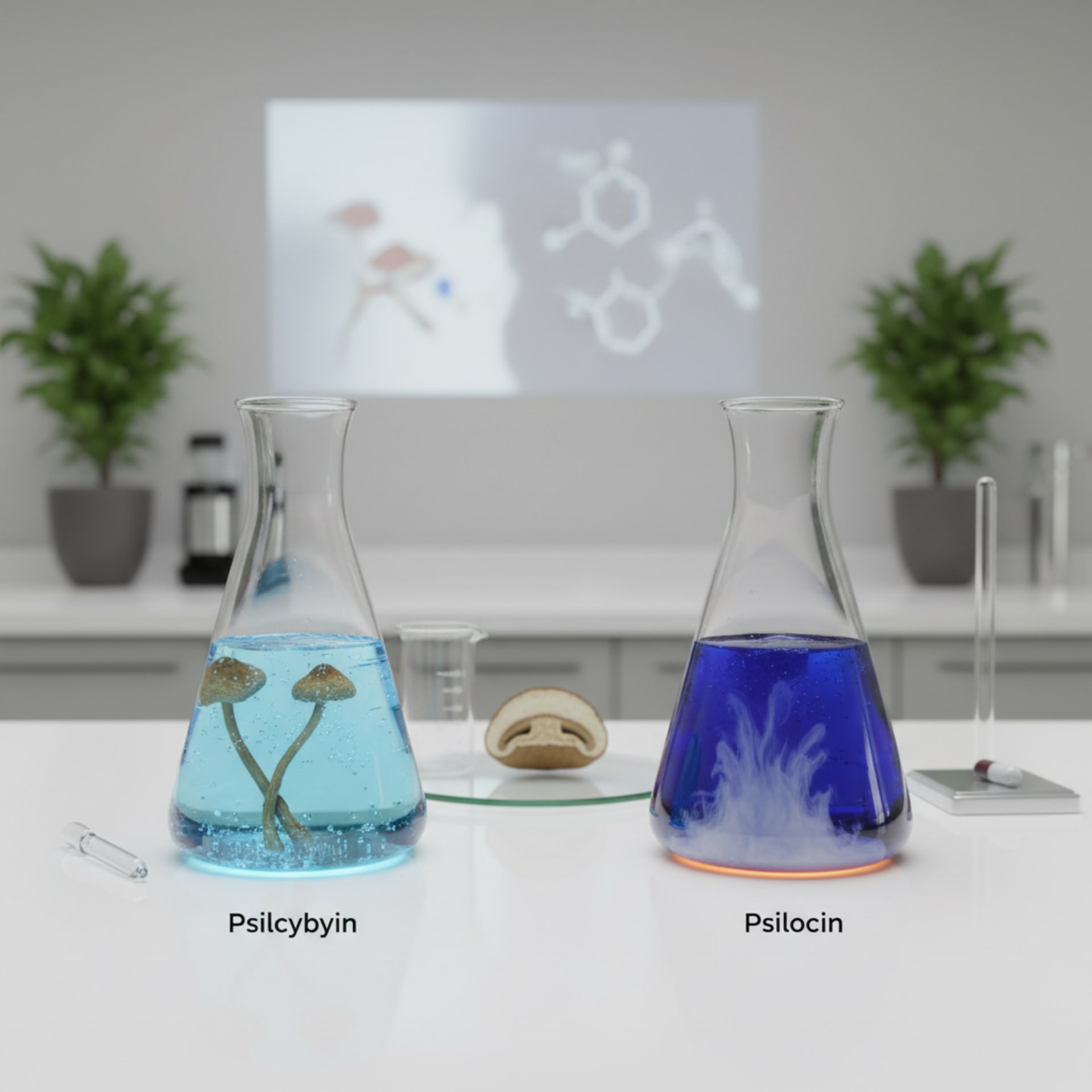
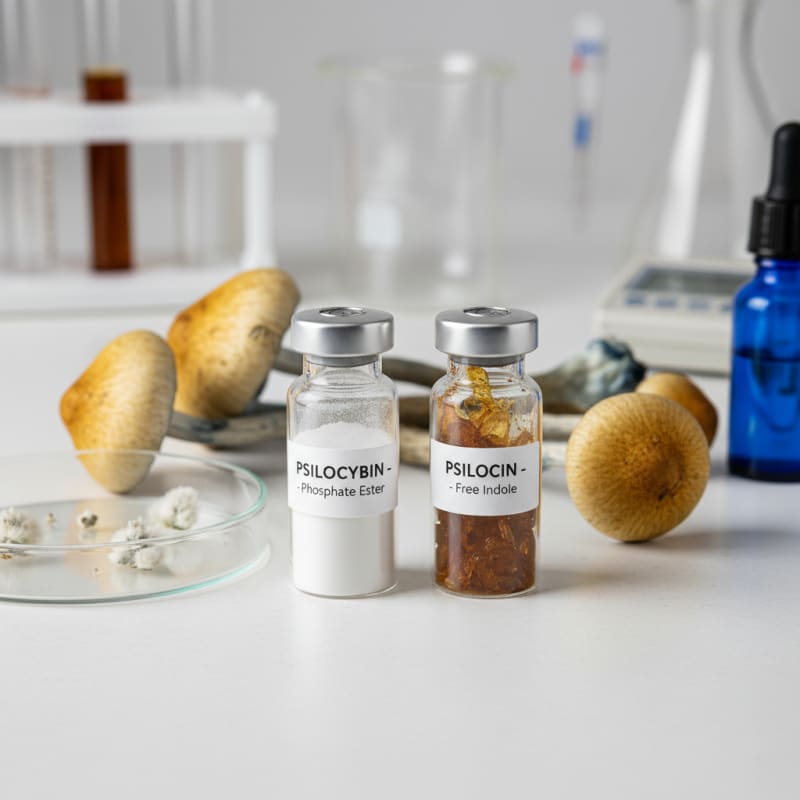
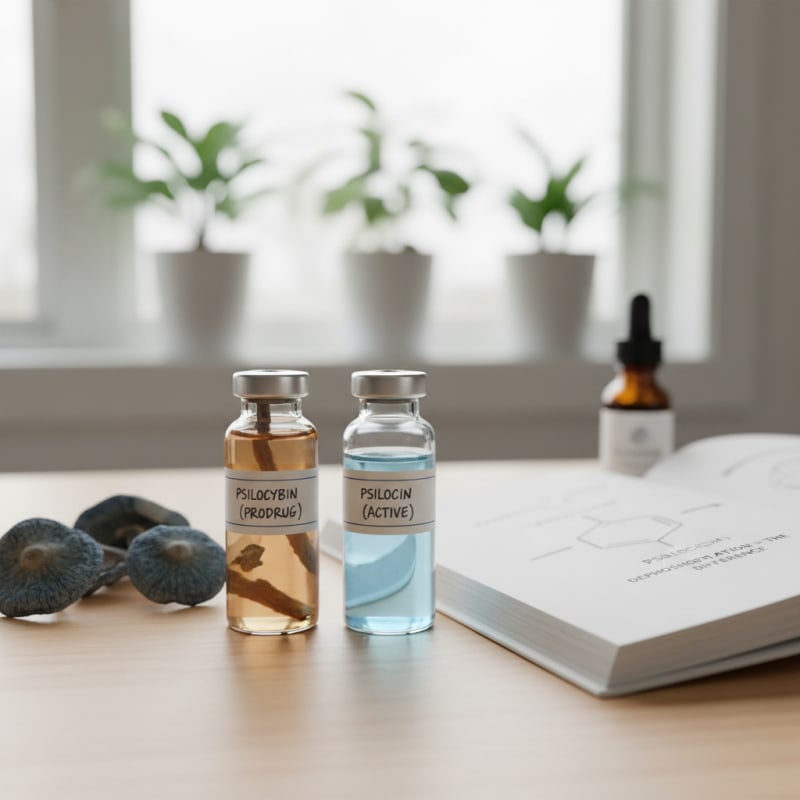
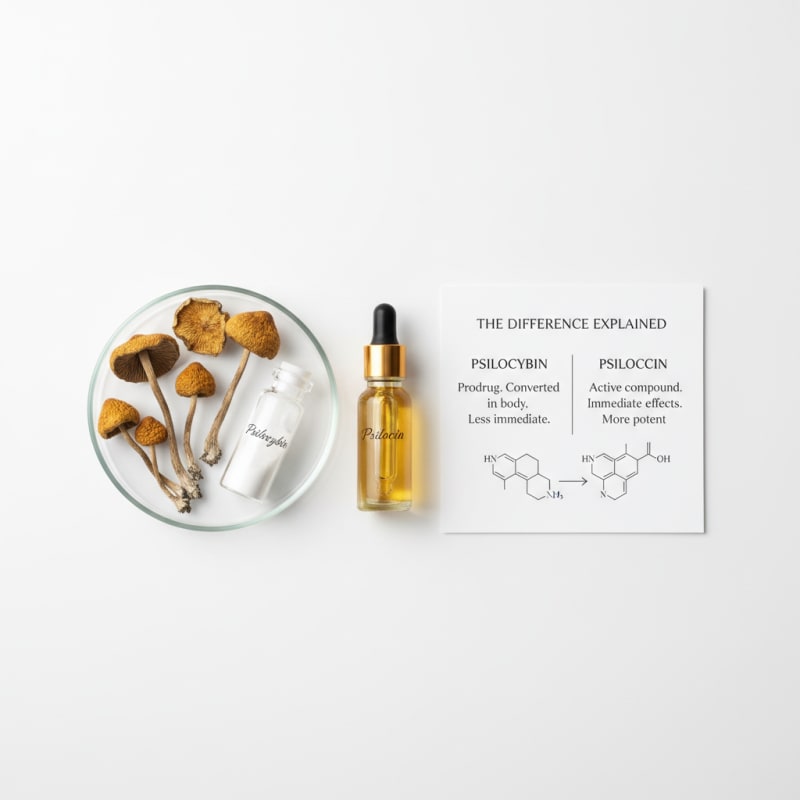
Psilocybin is the stable prodrug found in dried mushrooms. After ingestion, it converts to psilocin — the active compound that binds serotonin receptors and produces psychoactive effects.
Most product labels mention psilocybin.
Very few explain psilocin.
Both compounds are naturally occurring tryptamines found in psilocybin-containing mushrooms. They are closely related chemically, but they behave differently in the body and in storage.
Prodrug and Active Form
| Property | Psilocybin | Psilocin |
|---|---|---|
| Role | Prodrug (inactive until converted) | Active compound (binds 5-HT2A) |
| Stability | High — stable in dried material | Low — degrades with heat, light, oxygen |
| Lab reporting | Measured in mg/g | Measured in mg/g |
| Presence in product | Primary compound in dried mushrooms | Minor amounts, increases after ingestion |
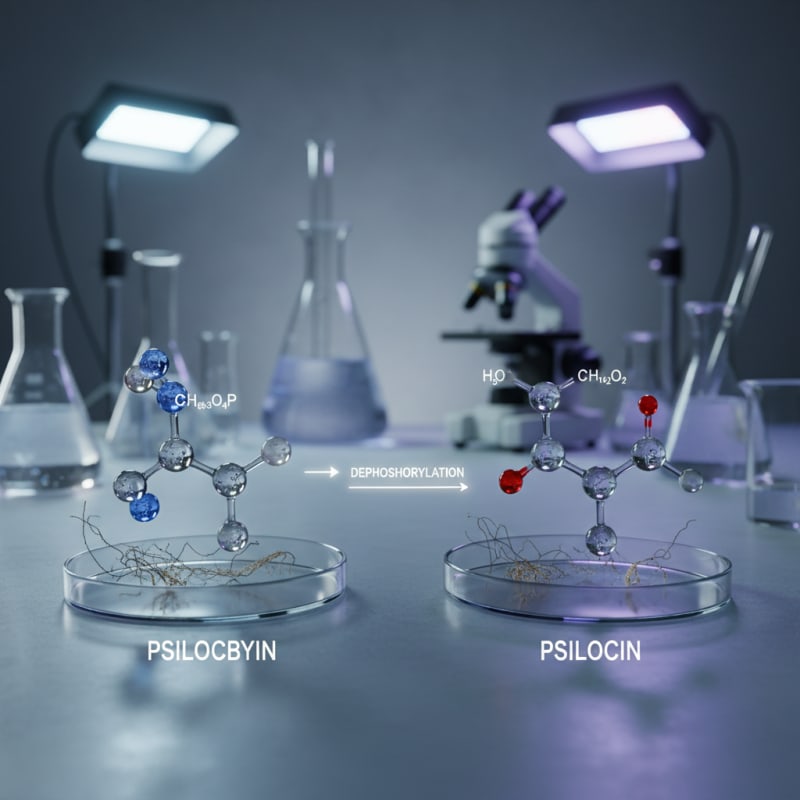
Psilocybin is considered a prodrug. That means it converts into psilocin after ingestion. This conversion process, called dephosphorylation, occurs primarily in the digestive system and liver. Once converted, psilocin is the compound that binds to serotonin receptors in the brain, especially the 5-HT2A receptor. That receptor interaction is associated with altered perception, mood shifts, and changes in cognition.
In simple terms, psilocybin is the stable form. Psilocin is the active form.
Why This Distinction Matters in Lab Testing
This distinction matters in lab testing.
Psilocybin is more chemically stable in dried mushrooms. Psilocin is less stable and degrades more easily when exposed to heat, light, and oxygen. Over time, stored material may show reduced psilocin levels while psilocybin remains measurable.
That is why laboratories typically measure both compounds separately.
A proper lab report may list:
- Psilocybin concentration in milligrams per gram
- Psilocin concentration in milligrams per gram
- Sometimes related compounds such as baeocystin
Total Potential Psilocin
Some labs also calculate a "total potential psilocin" value. This reflects the theoretical total psychoactive content after psilocybin converts to psilocin in the body.
If a product only lists psilocybin content, it does not necessarily show the full picture of psychoactive potential. If it only lists psilocin, it may underrepresent stability over time.
For dosing accuracy, both numbers matter. Capsules made from material with separate compound measurements will produce more predictable results than those relying on weight alone.
The compound names may sound interchangeable. Chemically, they are not.
One is the stored form. One is the functional form.
Understanding the difference clarifies what potency numbers on a lab report actually represent.

ShroomDash Editorial Team
Published 2026-02-18 · 6 min read · Lab Science