
Amanita Muscaria vs. Psilocybin Mushrooms
Quick Summary
Amanita muscaria, while increasingly popular, is not a psilocybin mushroom. It contains muscimol and ibotenic acid, which act on the GABA system to produce sedative or dissociative effects. This is fundamentally different from psilocybin, which acts on the serotonin system to produce classic psychedelic effects.
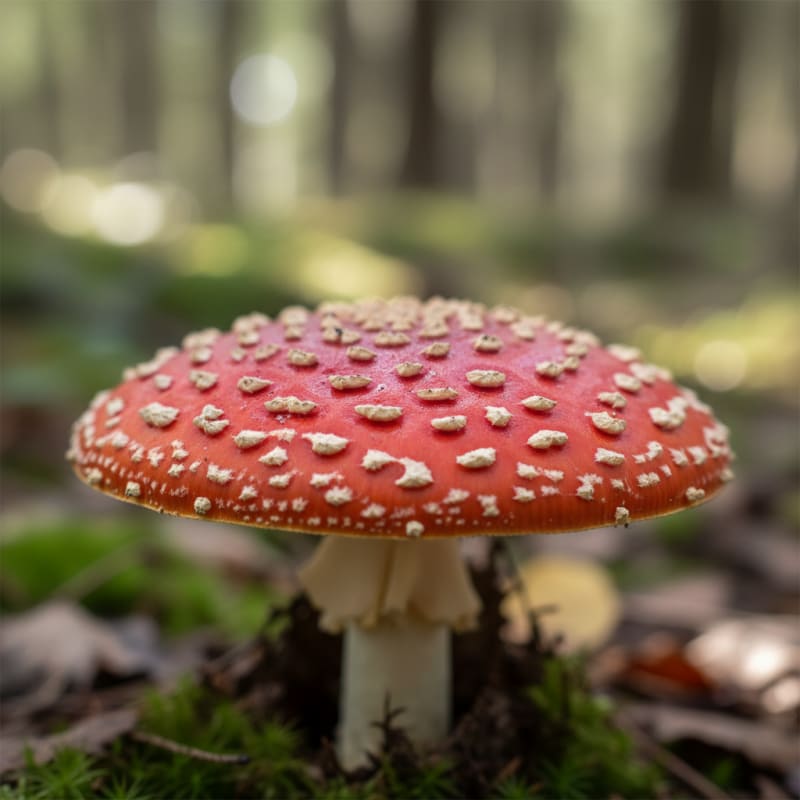


Recent data from a 2026 RAND study has revealed a surprising trend in psychedelic use: alongside psilocybin, *Amanita muscaria has emerged as one of the most commonly used substances, with an estimated 3.5 million U.S. adults using it in the past year. This places it ahead of more widely discussed compounds like LSD and ketamine. This mushroom, with its iconic red and white-spotted cap, is often depicted in folklore and pop culture, but its pharmacology and effects are fundamentally different from classic "magic mushrooms."
While both are fungi colloquially referred to as "magic," they belong to different families and contain entirely different active compounds. Psilocybin mushrooms, such as Psilocybe cubensis, produce psilocybin and psilocin. Amanita muscaria, on the other hand, contains muscimol and ibotenic acid. This chemical distinction is not just academic; it results in profoundly different experiences, safety profiles, and legal classifications.
What Makes Amanita Muscaria Different From Psilocybin?
The primary distinction lies in their active compounds and how they interact with the human brain. The effects of a substance are dictated by which neurotransmitter systems it engages, and these two fungi operate in separate domains.
*Psilocybe mushrooms contain psilocybin, which the body converts into psilocin. Psilocin primarily mimics the neurotransmitter serotonin and actively binds to serotonin receptors, particularly the 5-HT2A receptor. This interaction is responsible for the classic psychedelic effects, including visual alterations, deep introspection, and changes in perception. You can learn more about how psilocybin and psilocin work in our article, Psilocybin vs. Psilocin, Explained.
*Amanita muscaria operates on a completely different system. Its main psychoactive compound is muscimol, which is a potent agonist of the GABAA receptor. GABA is the brain's primary inhibitory neurotransmitter, responsible for calming nervous system activity. Instead of activating the serotonin system, muscimol enhances the effects of GABA, leading to sedative, dissociative, and hypnotic effects.
Here’s a direct comparison of their core pharmacology:
- Psilocybin Mushrooms (*Psilocybe species):
- Active Compounds: Psilocybin, Psilocin
- Mechanism: Serotonin (5-HT2A) receptor agonist
- Primary Effect: Classic psychedelic (altered perception, mood, and thought)
- Fly Agaric Mushrooms (*Amanita muscaria):
- Active Compounds: Muscimol, Ibotenic Acid
- Mechanism: GABAA receptor agonist
- Primary Effect: Dissociative, sedative-hypnotic
It's also important to note that raw Amanita muscaria contains high levels of ibotenic acid, a neurotoxic compound that is a precursor to muscimol. Ibotenic acid is associated with many of the unpleasant side effects of Amanita consumption, such as nausea, muscle twitching, and confusion. Proper preparation involves decarboxylation (typically through drying or simmering) to convert the ibotenic acid into the desired muscimol.
How Do the Effects of Amanita and Psilocybin Compare?
Given their different mechanisms, the subjective experiences are distinct. Users familiar with one should not expect the other to feel similar. The concept of set and setting is relevant for both, but the nature of the experience itself diverges significantly.
Typical psilocybin experiences are often characterized by:
- Heightened sensory perception (brighter colors, geometric patterns)
- Emotional release and introspection
- Altered sense of time and space
- Feelings of connection to others or the universe
- Potential for anxiety or challenging psychological content
In contrast, *Amanita muscaria experiences are generally described as:
- A dream-like or lucid dreaming state
- Feelings of dissociation from the body
- Sedation and a sense of "drunkenness" or poor coordination
- Repetitive or looping thoughts
- Potential for confusion, sweating, and nausea
While psilocybin often enhances clarity of thought and introspection, muscimol tends to create a more muddled, dream-like state. The classic "heroic dose" journey associated with psilocybin is not a feature of the *Amanita muscaria experience, which is more sedative in nature.
The market for psilocybin products has evolved to prioritize dose control through formats like Mushroom Capsules, which contain precise amounts of homogenized mushroom powder. This allows for a predictable and consistent experience, which is much harder to achieve with raw *Amanita muscaria due to wide variations in the ratio of ibotenic acid to muscimol from one mushroom to the next.
Why is Amanita Muscaria Becoming So Popular?
The rise of Amanita muscaria can be attributed to several factors, but its legal status is the most significant driver. In Canada and most of the United States (with the exception of Louisiana), Amanita muscaria is not a controlled substance because it does not contain psilocybin. This legal ambiguity has allowed a market to flourish, particularly online, where it is often sold for "ornamental" or "research" purposes.
This stands in stark contrast to psilocybin, which remains a Schedule III substance in Canada. The unregulated nature of the *Amanita market means products are not subject to the same quality control or testing standards expected for psilocybin. Consumers have no way of knowing the exact potency or the ratio of muscimol to the more toxic ibotenic acid in the products they buy.
Secondly, Amanita muscaria has immense cultural visibility. Its iconic appearance has cemented it in global folklore, from Siberian shamanism to its depiction in the Super Mario Bros. video game franchise. This familiarity makes it a curiosity for many, distinct from the more counter-culture reputation of *Psilocybe mushrooms.
The increasing interest in all psychedelics has created a spillover effect. As people seek out novel experiences or alternatives to psilocybin, the legally accessible *Amanita muscaria presents a convenient, if misunderstood, option. This trend underscores a growing public interest in exploring consciousness, even with compounds that fall outside the mainstream narrative of psychedelic therapy and wellness.
The divergence between these two fungi serves as a critical reminder that the term "magic mushroom" is imprecise. The effects, safety, and legality of psychoactive fungi are determined by their specific chemistry, not their shared classification as fungi.

ShroomDash Editorial Team
Published 2026-04-14 · 4 min read read · Guides