
Why Most Psilocybin Use is Microdosing
Quick Summary
Research shows that microdosing accounts for nearly half of all days of psilocybin use. This is largely because microdoses are sub-perceptual, fit into daily routines, and are perceived as lower risk than high doses. The availability of precisely dosed products like capsules and gummies also makes microdosing more accessible.


Recent data from a first-of-its-kind survey by the RAND Corporation revealed a startling statistic: of the more than 200 million days of psilocybin use reported in a year, nearly half involved microdosing. This finding suggests that for every momentous, high-dose psychedelic journey someone undertakes, there is an almost equal-and-opposite instance of someone taking a sub-perceptual dose as part of their regular routine.
While clinical research and media reports tend to focus on the power of large, therapeutic doses, the reality of day-to-day use paints a different picture. The quiet rise of microdosing reflects a user base more interested in subtle enhancement than in profound, consciousness-altering experiences. This preference is not arbitrary; it is rooted in practical considerations of logistics, risk, and accessibility that shape how people interact with psilocybin.
What Does a "Day of Use" Really Mean?
The concept of a "day of use" is fundamentally different for macrodosing and microdosing, which helps explain the near 50/50 split in the data. A macrodose day is a significant event. It demands preparation, a controlled environment, and often a day for recovery. A responsible high-dose session requires:
- Time Commitment: A typical experience lasts 4-6 hours, but the entire process, including preparation and integration, can occupy a full day or even a weekend.
- Support System: It is strongly advised to have a trusted sitter or guide present, especially for inexperienced users or those exploring therapeutic outcomes. The model used in Johns Hopkins research involves multiple sessions with a dedicated medical team.
- Controlled Setting: A safe, comfortable, and private environment is crucial to minimize the risk of anxiety or a challenging experience.
A macrodose is an infrequent event, undertaken a handful of times per year at most. In contrast, a microdose day is designed to be unremarkable. The dose is sub-perceptual, meaning it does not produce a psychedelic state. It integrates into a person’s existing schedule—work, errands, social engagements—without disruption. Following a protocol like the one popularized by James Fadiman (one day on, two days off) results in approximately 10 microdosing "use days" per month. This frequency quickly accumulates, explaining how millions of users can generate over 100 million microdosing days in a single year.
Is Microdosing a Lower-Risk Approach?
Perceived risk is a major factor driving the popularity of microdosing. High-dose psilocybin experiences can be psychologically intense. While they hold potential for profound breakthroughs, they also carry the risk of challenging experiences, often called "bad trips." This is why clinical trials emphasize controlled settings and psychological support to ensure participant safety. For the average person without access to such a framework, a high dose can be an intimidating prospect.
Microdosing, on the other hand, sidesteps these acute risks. By definition, a microdose avoids the intense sensory and cognitive alterations of a macrodose. Users are not confronting their ego or navigating kaleidoscopic visuals; they are seeking a subtle shift in their baseline state. This makes the practice feel more accessible and manageable for daily life. While the long-term effects of microdosing are still being studied, its immediate risk profile is undeniably lower than that of a high dose, making it an attractive entry point for many. This aligns with the broader trend of psilocybin becoming a mainstream practice centered on wellness rather than radical intervention.
What Are the Different Goals of Dosing?
The goals of microdosing also differ significantly from those of macrodosing. High-dose sessions are typically pursued for specific, powerful outcomes:
- Therapeutic Breakthroughs: In clinical settings, high doses are used to treat conditions like depression, anxiety, and addiction.
- Spiritual Exploration: Many use macrodoses to experience a sense of unity, transcendence, or mystical consciousness.
- Deep Personal Insight: A single high-dose experience can provide novel perspectives on one's life, relationships, and personal challenges.
Microdosing operates on a different plane. The goals are not about breakthroughs but about incremental improvements integrated into daily life. Users commonly report benefits such as:
- Enhanced focus and creativity
- Improved mood and emotional regulation
- Reduced anxiety in social and professional settings
- Greater presence and appreciation for daily life
These objectives align more with a wellness or self-optimization model than a medical or spiritual one. It is a tool for fine-tuning one's experience of the world, not for fundamentally changing it in a single session.
How Do Product Formats Guide User Behavior?
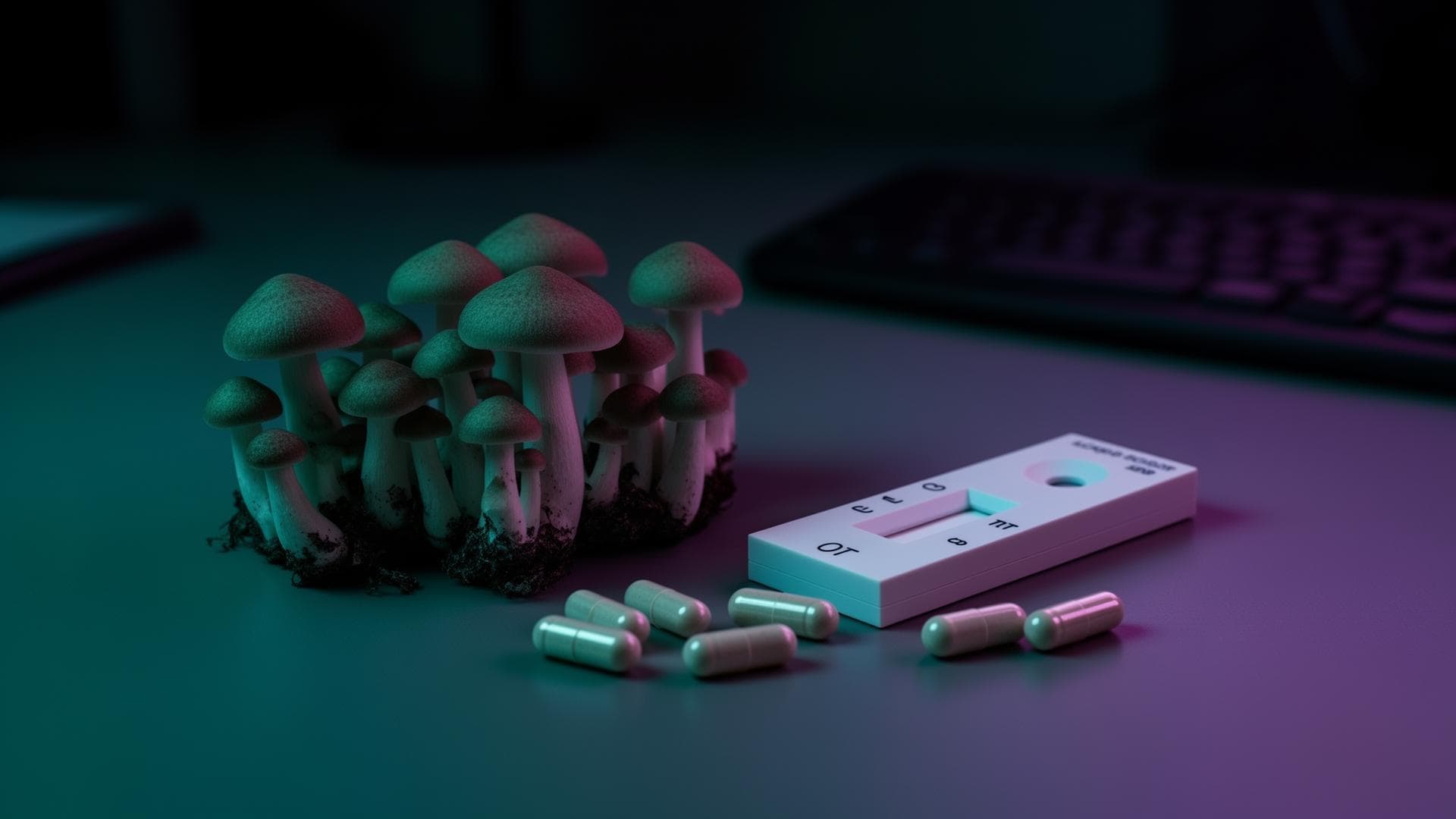
The rise of microdosing is intrinsically linked to the evolution of psilocybin products. Preparing a dose from raw, dried mushrooms requires a scale, a grinder, and careful calculation to manage potency variations. This process can be imprecise and cumbersome, particularly for small doses.
The availability of professionally produced, precisely dosed products has been a game-changer. Formats like capsules and edibles remove the friction and guesswork. For instance, our Clarity Microdose Capsules contain a specific 100mg of ground *Psilocybe cubensis, offering perfect consistency for any microdosing protocol. Easy-to-dose edibles, like our Fuse Mushroom Chocolate Bar which is scored into predictable 220mg squares, also simplify the process. Predictability is key, and these modern product formats empower users to consume with confidence and control.
This stands in contrast to the more involved preparation required for a macrodose from raw mushrooms. The convenience and precision of capsules, gummies, and chocolates have made microdosing a simple, repeatable habit, further fueling its adoption over less predictable methods.
The data shows that while high-dose psilocybin journeys are powerful and transformative, the dominant trend is one of subtle, consistent, and integrated use. The practical appeal of easily fitting small doses into a daily routine, combined with a lower perceived risk and the availability of precise products, is what drives the quiet majority of psilocybin use today.

ShroomDash Editorial Team
Published 2026-04-07 · 4 min read read · Dosing