
What Is a "Dose" of Psilocybin?
Quick Summary
Public conversation about psilocybin often focuses on single, large doses used in therapy. However, recent data shows that nearly half of all psilocybin use involves microdosing—taking small, regular amounts for wellness. This difference in how a 'dose' is defined creates a gap between perception and reality.
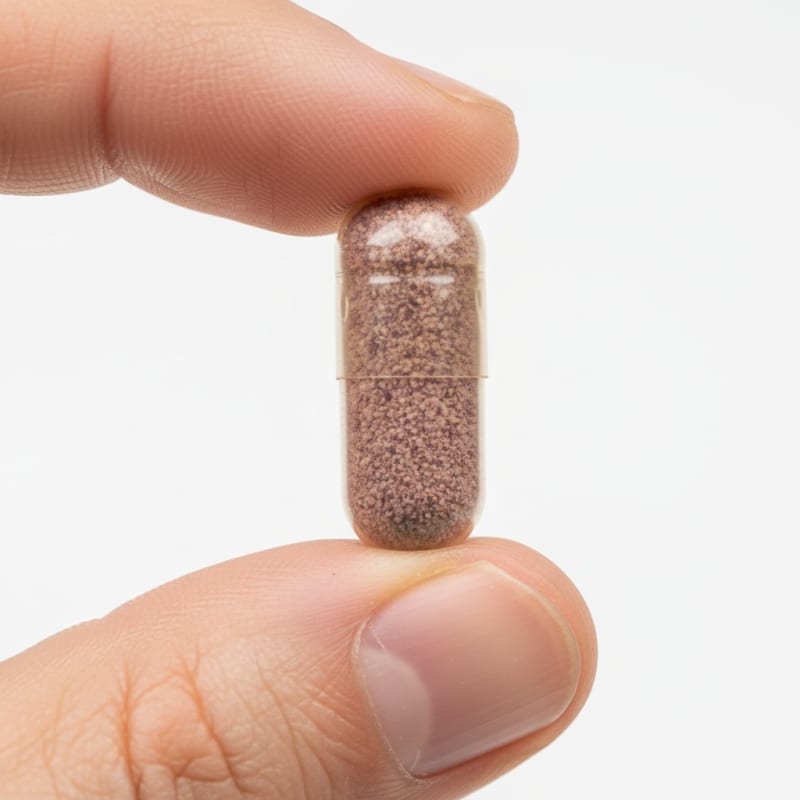


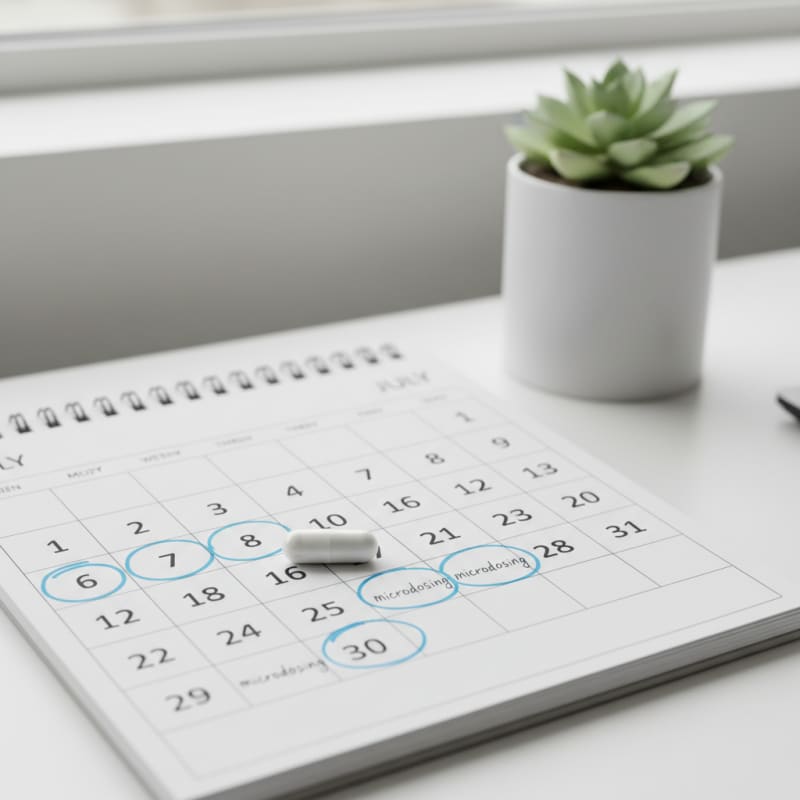
The conversation around psilocybin is expanding, but the language used to describe it often creates a confusing picture. When news outlets report on psychedelic research, they typically highlight studies involving a single, large dose administered in a clinical setting. This has cemented an image of psilocybin use as a rare, intense, and professionally supervised event. Yet, recent data reveals a starkly different reality for the majority of users, for whom psilocybin is a routine supplement, not a once-a-year therapeutic intervention.
The discrepancy stems from a simple but profound question: what do we actually mean by a "dose" of psilocybin? The answer from a clinical researcher is fundamentally different from that of a wellness-oriented individual. This gap in definitions explains the massive disconnect between the public narrative and how millions of people are integrating psilocybin into their lives.
How Do Clinical Researchers Define a Dose?
In the context of psychedelic-assisted therapy and clinical trials, a "dose" is a carefully measured, high-impact quantity of psilocybin. This is often referred to as a macrodose, and it is specifically designed to induce a profound, non-ordinary state of consciousness. A typical clinical dose might range from 10mg to 30mg of pure psilocybin, an amount sufficient to occasion a powerful 4-6 hour psychedelic experience.
The entire therapeutic model is built around this single event. The objectives are ambitious: to catalyze mystical-type experiences that can lead to lasting breakthroughs in patients with conditions like depression, addiction, or PTSD. We see this in recent studies exploring psilocybin as an aid for smoking cessation, where a few high-dose sessions are paired with extensive psychotherapy. The dose is the catalyst, not the regimen.
This framework requires significant support structures:
- Preparation: Multiple therapy sessions prepare the participant for the experience.
- Supervision: The session itself occurs in a controlled environment with trained facilitators present.
- Integration: Follow-up sessions help the participant make sense of the experience and apply insights to their life.
This high-intensity, low-frequency model is what captures headlines. It is dramatic, measurable, and fits neatly into the regulatory pathways for drug development. However, it represents only one end of the dosage spectrum and a fraction of total use.
How Does Data Suggest People Actually Use Psilocybin?
Emerging data paints a much more nuanced picture of psilocybin use. A landmark 2026 RAND study revealed that for the millions of adults who use psilocybin, microdosing is an extremely common practice. According to the research, among people who used psilocybin in the past year, about two-thirds reported microdosing, and these small doses accounted for nearly half of all psilocybin use days.
Here, the definition of a "dose" is completely different. A microdose is a sub-perceptual or sub-hallucinogenic amount, typically between 50mg and 250mg of dried mushroom material (which contains a much smaller amount of pure psilocybin). The goal is not to trigger a psychedelic experience but to achieve subtle, cumulative benefits, such as:
- Improved mood and emotional regulation
- Enhanced creativity and problem-solving
- Increased focus and productivity
- Reduced anxiety
Unlike the single-event clinical model, microdosing is a routine. A user might follow a protocol of taking a dose every few days for several weeks. In this context, a "dose" is a small, manageable component of a daily wellness practice, much like a vitamin or supplement. Our Clarity Microdose Capsules are designed specifically for this purpose, providing accurately measured amounts of *Psilocybe cubensis for a consistent and predictable experience. You can Explore Microdose Capsules to see how they are formulated for routine use.
Why Does This Difference in Definition Matter?
The disconnect between the clinical definition of a "dose" and the reality of its widespread, low-dose use has significant consequences. Public perception, shaped by media fixation on high-dose therapy, often misunderstands the motivations and practices of the microdosing majority. This can lead to alarmist narratives that conflate taking a small capsule for focus with undertaking a life-altering psychedelic journey.
This definitional gap also impacts regulation and product development. Policies designed to control access to high-potency psychedelics may inadvertently stifle the availability of safe, reliable, low-dose products that millions of people use responsibly. The market needs to cater to both ends of the spectrum: products for occasional, high-impact experiences and products for sustained, low-impact wellness routines.
For many, the ideal format is one that offers flexibility. Products like our Wonder Mushroom Chocolates allow for easy and precise division. A single square can serve as a microdose, while multiple squares can provide a more moderate, recreational experience. View Mushroom Chocolates and other edibles to understand the range of available formats.
How Should I Approach My Own Dosage?
There is no universal "dose." The right amount and frequency depend entirely on your personal goals and context. The first step is to clarify your intention. Are you seeking a profound, introspective experience to work through a specific issue? Or are you looking for a subtle, long-term enhancement of your daily life? The answers will guide you toward either a macrodose or a microdose protocol.
There is also a vast middle ground. So-called "museum doses" or recreational doses are large enough to produce noticeable changes in perception and mood but are not as overwhelming as a full clinical macrodose. As discussed in our post on Why Mushroom Experiences Vary, individual factors like genetics, metabolism, and mindset play a crucial role.
Regardless of the path chosen, the principle of "start low and go slow" is paramount. A dose is not a fixed unit but a dynamic variable in a personal equation. It is a tool to be understood and respected, not a one-size-fits-all prescription.
The language we use to discuss psilocybin is slowly catching up to the reality of its use. As more data emerges, the binary perception of "dose"—either a massive clinical event or a negligible micro-amount—will likely give way to a more sophisticated understanding of a full spectrum of use cases, each with its own definition, purpose, and protocol.

ShroomDash Editorial Team
Published 2026-04-24 · 4 min read read · Dosing