

Psychedelics & Public Health: The Microdosing Boom
Quick Summary
Recent studies show millions of adults are microdosing psychedelics like psilocybin, a trend that is growing rapidly outside of formal medical settings. This widespread, self-directed use for wellness contrasts sharply with the high-dose, supervised model used in clinical research, creating a complex public health conversation about safety, regulation, and evidence.
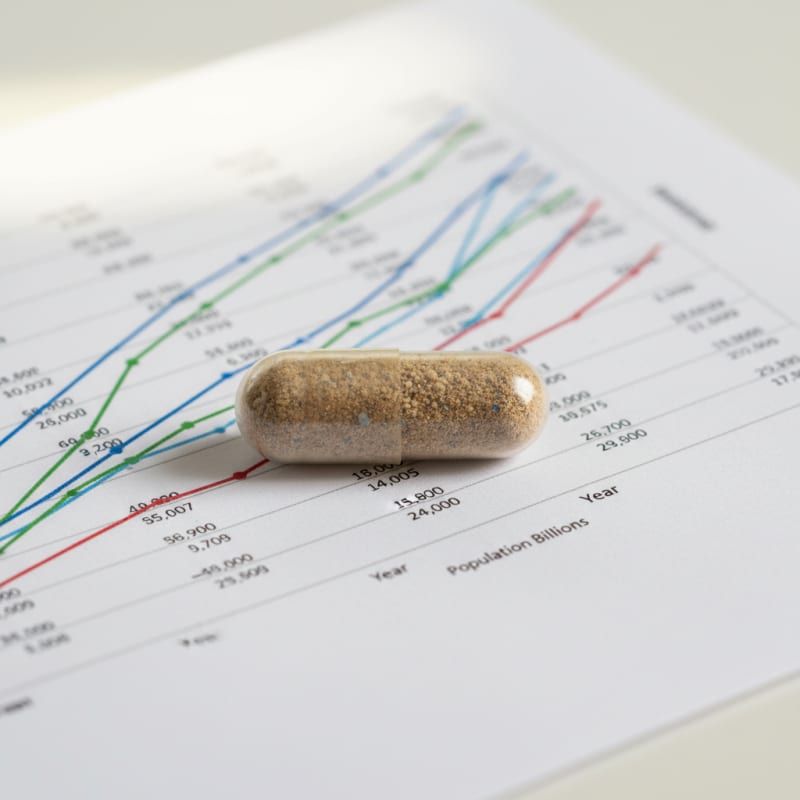
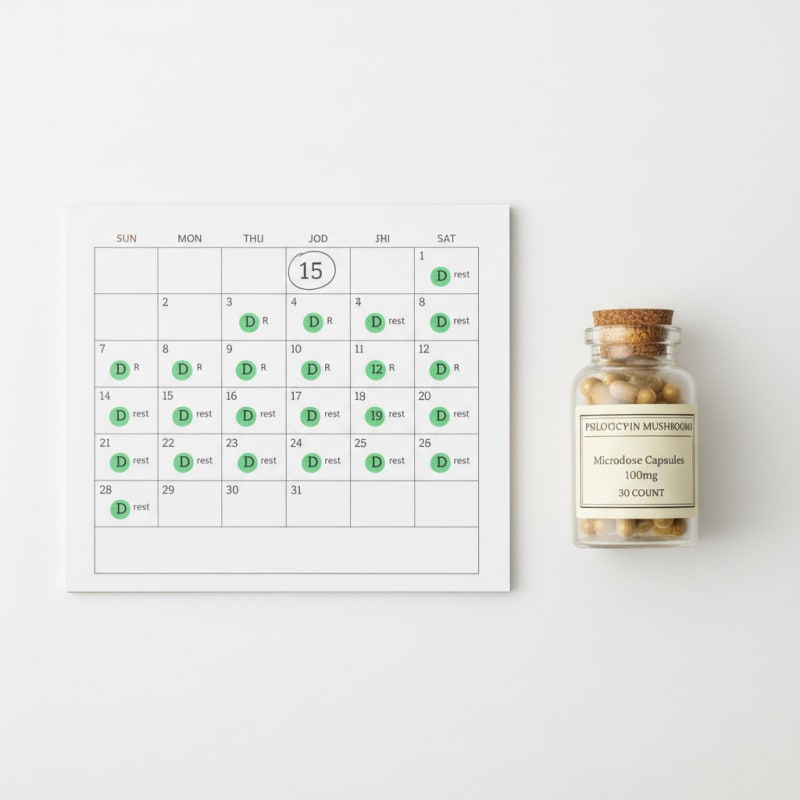

Recent data has uncovered a massive divergence between the two worlds of psilocybin. On one path, there is structured, high-dose clinical research, which is rigorously controlled and focused on treating specific medical conditions. On the other, there is a rapidly expanding real-world trend of self-directed microdosing for general wellness. A 2026 study by the RAND Corporation brought this into sharp focus, estimating that millions of U.S. adults are now microdosing. This enormous scale of use, happening far outside of any clinical or medical setting, has shifted the conversation and created a new set of public health considerations.
The data suggests that for every person participating in a formal psilocybin trial, there are thousands experimenting on their own terms. This gap between sanctioned research and popular use isn’t just a curiosity; it represents a significant public health phenomenon that requires a closer look at the data, the motivations, and the potential risks involved.
How Widespread Is Microdosing Really?
Until recently, the prevalence of microdosing was largely a matter of speculation, based on media reports and anecdotal accounts. The RAND study, however, provided the first large-scale, survey-based data. It found that among U.S. adults who had used psilocybin in the past year, approximately two-thirds reported microdosing at least once. This indicates that taking small, sub-perceptual doses is not a niche activity but a common practice among users.
Perhaps the most telling statistic from the report is that of the more than 200 million days of psilocybin use reported in the past year, nearly half involved microdosing. This figure is critical because it highlights that microdosing is not just a one-time experiment for most who try it. It is often a repeated, routine practice integrated into a weekly or monthly schedule. This pattern of sustained use is fundamentally different from the occasional high-dose experience that has historically characterized psychedelic use. When millions of people adopt a new wellness routine, it naturally invites questions about its function, safety, and the evidence supporting it.
What Is the Disconnect With Clinical Research?
Clinical research, such as the work being done at the Johns Hopkins Center for Psychedelic and Consciousness Research, operates on a completely different model. The primary focus is on using high doses of psilocybin in a therapeutic setting to treat specific, often severe, conditions like major depressive disorder or the anxiety associated with a life-threatening illness. These sessions are conducted under the direct supervision of a medical team and are combined with structured psychotherapy.
The goals of this research are clear:
Therapeutic Outcomes: To develop new, effective treatments for psychiatric disorders. Standardized Dosing: To use a high-potency, medically supervised dose to induce a profound psychedelic experience, which is believed to be integral to the therapeutic effect. Safety and Supervision: To ensure patient safety within a controlled environment, mitigating risks through screening and expert guidance.
Real-world microdosing sits at the opposite end of the spectrum. Users are self-directing their experience, typically for goals like improved creativity, focus, and general well-being rather than treating a diagnosed illness. There is no medical supervision, and critically, there is no agreed-upon standard for what a "microdose" even is. This lack of a standard definition makes it incredibly difficult to study and is a major point of concern for some public health experts. For users, this means that achieving a consistent experience depends entirely on the quality and reliability of their products. Using precisely measured products, like those found in our capsules category, becomes essential for anyone attempting to follow a protocol.
Why Do Some Experts Find This Trend Concerning?
While many users report positive outcomes, the rapid, unregulated growth of microdosing has raised flags for some in the scientific and medical communities. The term "alarming" has been used to describe the trend, not because psilocybin is inherently dangerous in the way many other substances are, but because millions are engaging in a practice with a very limited evidence base.
The primary concerns from a public health perspective include:
Lack of Regulation and Potency Variation: The market is flooded with products that have not been tested for potency or contaminants. A person may be taking a dose that is far higher or lower than intended, making a consistent, sub-perceptual experience difficult to achieve. This is a core reason why dosing consistency matters more than strain names. Unknown Long-Term Effects: While high-dose psilocybin has been demonstrated to be safe in controlled settings, the effects of taking small, repeated doses over months or years are not yet known. Research is needed to understand any potential cumulative effects. Absence of Clinical Evidence for Wellness Claims: The promising results seen in high-dose psychedelic-assisted therapy do not automatically transfer to low-dose, unsupervised use. As a result, microdosing is sometimes promoted for benefits that have not been scientifically validated. This is a key reason why science often overlooks microdosing.
For those managing their own microdosing regimen, using a product with a clearly defined quantity of psilocybin is a fundamental first step. Products like our Balance 100mg Microdose Capsules are manufactured with this specific need in mind, ensuring each dose is identical to the last.
Navigating the Gap Between Research and Reality
The vast and growing popularity of microdosing ensures that it can no longer be ignored. While it is not a replacement for medically supervised therapy, users can still approach it from a perspective of safety and self-awareness. Taking a methodical approach is key, which involves understanding that product format is less important than the precision of the dose. Whether using gummies or capsules, the active ingredient is what matters.
Products like Solace 250mg Gummies offer a different format but are built on the same principle of standardized, reliable dosing. For anyone exploring microdosing, the goal should be to remove as many variables as possible, and that begins with a product that provides a predictable amount of psilocybin. From there, an individual can more accurately track its effects and determine the sub-perceptual dose and schedule that works for them.
The real-world use of psilocybin has now reached a scale that rivals its study in clinical settings. This massive, decentralized wellness movement has created an urgent need for research to catch up, particularly by focusing on the low-dose, long-term use patterns that millions of people are already actively exploring.

ShroomDash Editorial Team
Published 2026-03-07 · 5 min read read · Microdosing