

Why Dosing Consistency Matters More Than Strain Names
Quick Summary
The variable that changes outcomes most is not the strain — it is the amount of active compound consumed. Homogenized products deliver more predictable experiences than strain selection alone.
The first question most buyers ask is about strain.
Golden Teacher. Penis Envy. Something exotic with a story attached.
The assumption is that the name determines the experience.
In practice, the variable that changes outcomes most is not the strain. It is the amount of active compound consumed.
How Much Does Potency Actually Vary?
| Batch | Weight consumed | Psilocybin (mg/g) | Total psilocybin (mg) |
|---|---|---|---|
| Batch A | 1.0 g | 6 | 6.0 |
| Batch B | 1.0 g | 10 | 10.0 |
| Difference | — | 67% higher | 67% more active compound |
Start with the obvious. Two different strains can vary in psilocybin concentration. That part is real. Some cultivars are known to produce higher average potency than others. But within a single strain, potency can also vary from batch to batch, and even from mushroom to mushroom within the same harvest.
That variability is biological. Mushrooms are not manufactured tablets. They are grown organisms. Substrate composition, growing conditions, genetics, and harvest timing all influence active compound levels.
Now imagine two people each take one gram.
One gram from Batch A might contain 6 milligrams of psilocybin per gram. One gram from Batch B might contain 10 milligrams per gram. On paper, both took "one gram." Chemically, they did not take the same amount.
This is where dosing consistency becomes more important than the strain label.
What Homogenization Does
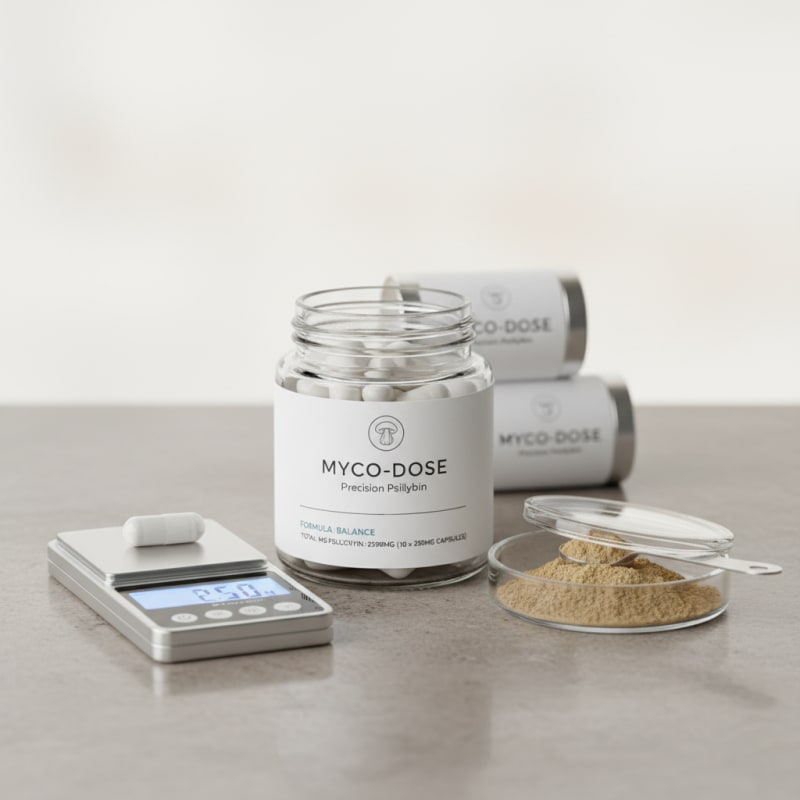
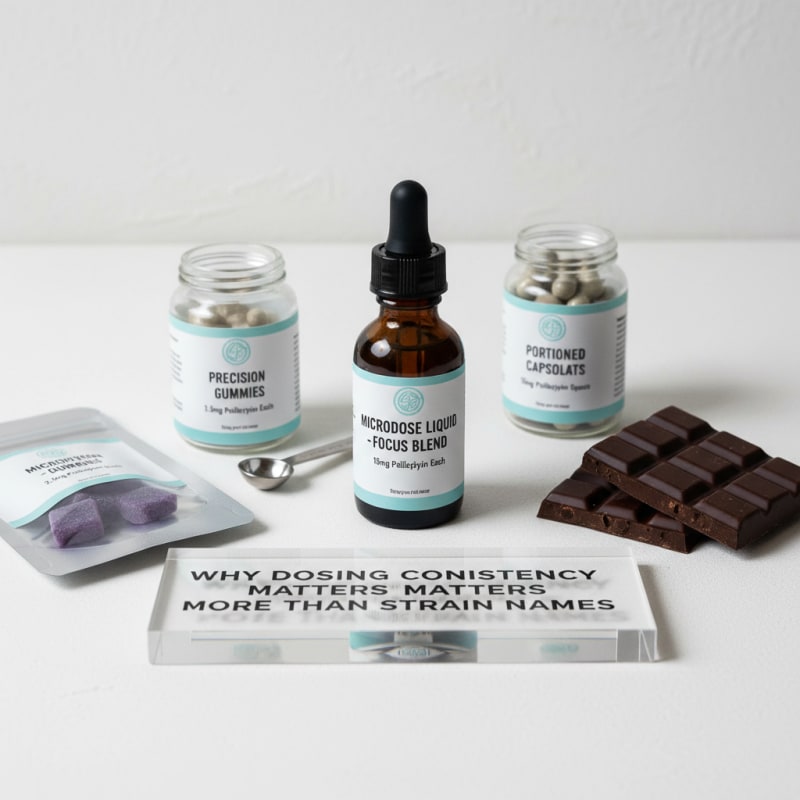
When products are homogenized — meaning the dried material is ground and mixed thoroughly before being portioned into capsules or divided evenly into chocolate squares — variability between individual units decreases. The active compounds are distributed more evenly across the batch.
It does not eliminate natural variation. It reduces it.
Without homogenization, someone pulling whole mushrooms from a bag might unintentionally select pieces with uneven potency. Caps can differ from stems. Smaller mushrooms can differ from larger ones. The experience becomes less predictable.
In contrast, a capsule labeled 0.2 grams that is filled from a properly mixed batch is more likely to deliver similar effects across units. A segmented chocolate bar designed to contain a total of 3.5 grams and divided into 12 equal pieces is structured for incremental dosing.
Why Does Consistency Change Planning?
Consistency changes how people plan.
When someone increases from 0.2 grams to 0.4 grams, they expect a predictable shift. If the product is inconsistent, that shift may be larger or smaller than intended.
Do Strain Names Still Matter?
Strain names still matter to some degree. Different genetic lines can show different average potency ranges. But those differences are often overstated relative to the impact of total milligram intake.
If one strain averages 0.6 percent psilocybin and another averages 1.0 percent, the practical difference is in how much material is required to reach the same active dose. Once adjusted for potency, the subjective distinction often narrows.
Marketing vs. Measurement
People tend to anchor on names because names are easy to market.
Measurement is less glamorous. It is quieter. It requires documentation and batch control.
But when someone is trying to repeat an experience or avoid overshooting one, repeatability matters more than branding.
And repeatability begins with how evenly the material was processed before it was portioned.

ShroomDash Editorial Team
Published 2026-02-15 · 8 min read · Dosing