Psilocybin Support Mirrors 90s Cannabis Views
Quick Summary
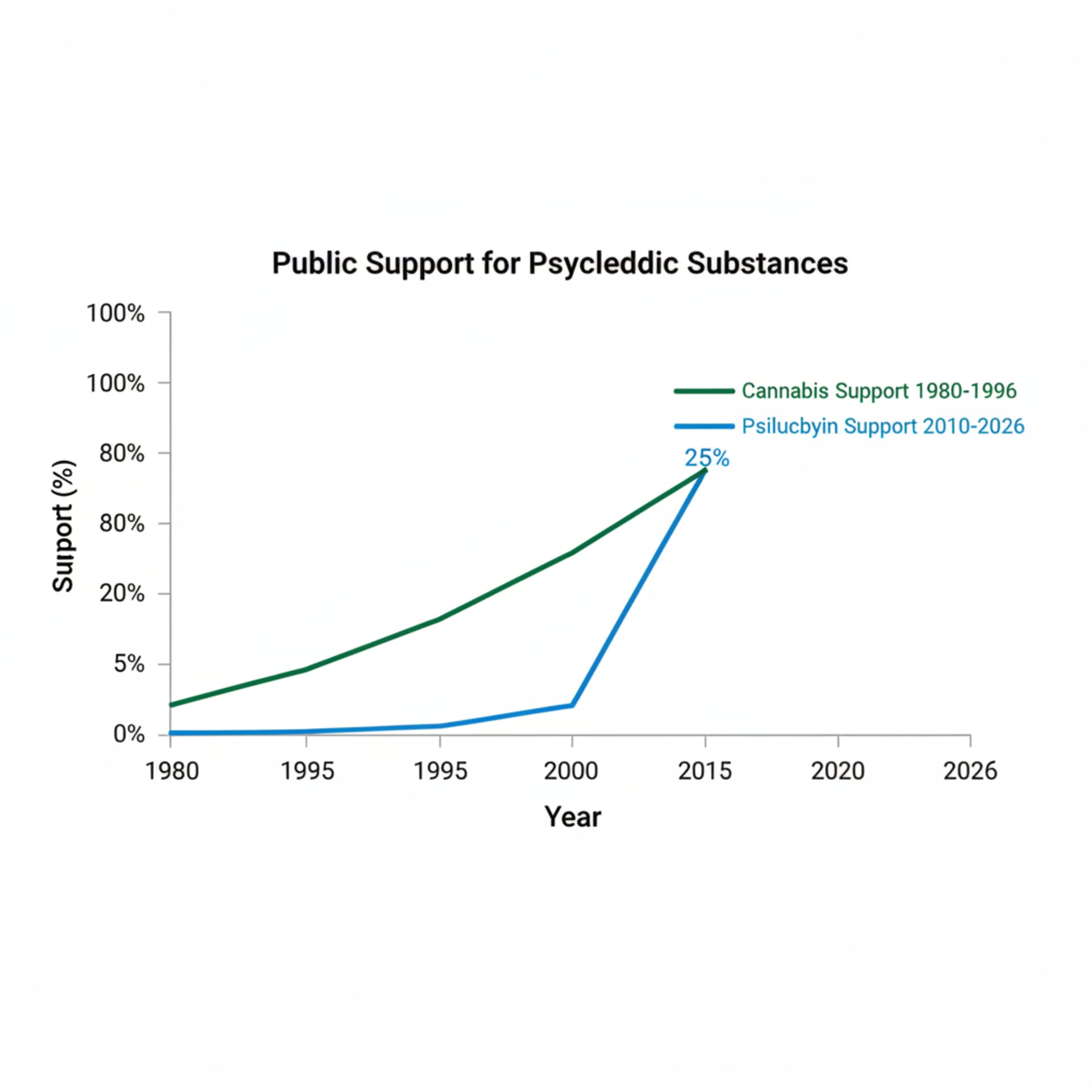
Recent data shows about 23% of Americans support legal psilocybin, a figure strikingly similar to public support for cannabis just before medical legalization began in the 1990s. This shift is driven by increased research, media exposure, and firsthand experience through practices like microdosing.


Recent data from the 2025 RAND Psychedelics Survey has provided a compelling benchmark for the psilocybin movement. The study reveals that nearly one in four Americans, or 23%, believe that the use of psilocybin mushrooms should be legal. While this number is a minority, it represents a significant cultural footprint. More importantly, it mirrors public opinion on cannabis in the mid-1990s, just before a wave of state-level medical legalization began that would fundamentally reshape drug policy in North America. This parallel suggests a potential trajectory for psilocybin, moving from the fringes of public discourse to a subject of serious policy consideration. Understanding this historical context is crucial for interpreting the current landscape of psychedelic acceptance and regulation.
How does current psilocybin support compare to historical cannabis data?
To understand the significance of the 23% support for psilocybin, it is essential to place it in both a current and historical context. Today, public support for cannabis legalization is robust, consistently polling around 65-70%. The journey from sub-25% support to a supermajority took nearly three decades of advocacy, legislative changes, and cultural normalization. The RAND report highlights that the current figure for psilocybin is strikingly similar to the support for cannabis in the years immediately preceding 1996, when California passed Proposition 215, the first comprehensive medical cannabis law in the United States.
This comparison is noteworthy for several reasons:
- Pace of Change: It signals a potentially accelerated path for psilocybin acceptance. The cultural and informational infrastructure that cannabis advocates had to build from scratch now exists. The public is more familiar with concepts like medical use, decriminalization, and regulated markets.
- Demographic Shifts: Support is not uniform across all demographics. Younger generations, who grew up in an era of waning cannabis prohibition, show higher levels of support for psychedelic legalization. This demographic tailwind was also a key factor in the cannabis movement's success.
- Substance-Specific Views: The same RAND study found significantly less support for substances like LSD or MDMA, at around 10%. This indicates the public is making nuanced distinctions between different psychedelics, with psilocybin mushrooms often perceived as more "natural" or approachable, much like the cannabis plant was.
What is driving the shift in public perception?
The growing acceptance of psilocybin is not happening in a vacuum. It is the result of a confluence of factors that have brought psychedelic science and culture into the mainstream. A primary driver is the renaissance in clinical research. Institutions like Johns Hopkins University and Imperial College London have published numerous studies on psilocybin's potential for treating conditions like major depression and end-of-life anxiety. This research lends a layer of medical legitimacy that was absent during the first wave of psychedelic exploration in the 1960s. For those interested in the clinical data, our article on psilocybin and Major Depressive Disorder provides more detail.
Media coverage has followed the science, with documentaries, podcasts, and major news outlets discussing psychedelics with increasing frequency and seriousness. This exposure helps to destigmatize the substances and educate the public on their potential applications.
Furthermore, firsthand experience is a powerful motivator. The RAND report noted that among those who had used psilocybin in the past year, support for legalization jumps to 62%. The rise of microdosing, in particular, has created a pathway for individuals to explore psilocybin in a controlled, sub-perceptual manner. As more people experiment with low-dose regimens, detailed in guides like our post on how to microdose psilocybin, their personal experiences inform their policy views.
How do modern products influence user experience?
Unlike the 1990s cannabis landscape, which was dominated by inconsistent and unverified products, today's psilocybin market offers a range of precisely formulated options. This evolution from a highly variable agricultural product to standardized consumer goods plays a significant role in shaping user experience and, by extension, public opinion. When new users have positive, predictable experiences, they are more likely to view the substance favourably.
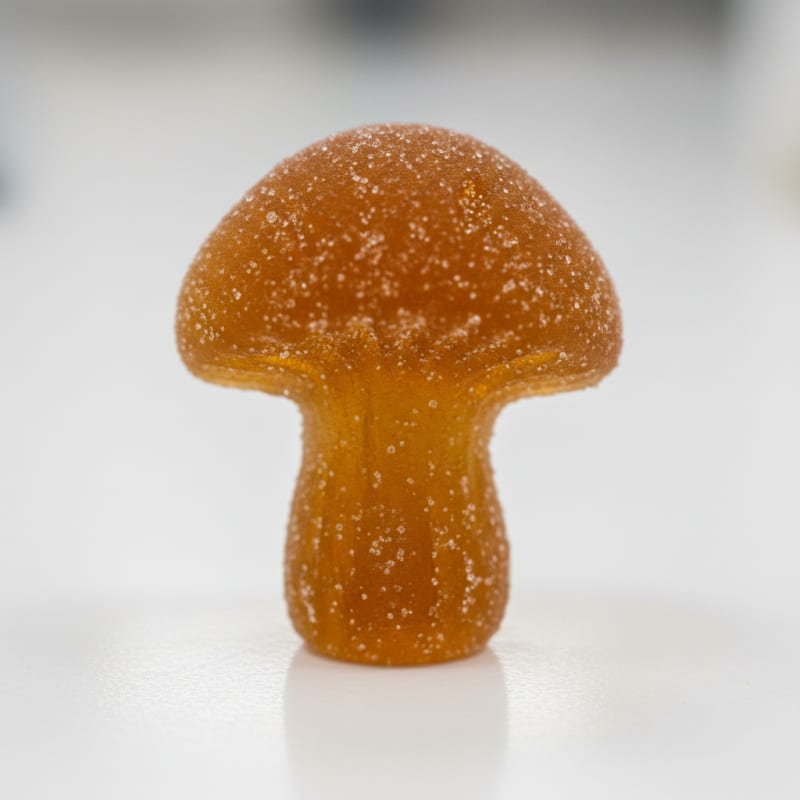
Products like edibles remove many of the barriers and uncertainties associated with consuming raw mushrooms. For example, our ShroomDash Blue Raspberry Gummies provide a consistent dose of psilocybin in each piece, eliminating the guesswork involved in dosing dried fungus, which can vary wildly in potency. This allows for a more controlled and approachable introduction. You can browse our full selection in the gummies category.
This move toward product sophistication mirrors the evolution of the cannabis industry, but on a much faster timeline. The availability of professionally made edibles, such as chocolates and gummies, means that consumers can engage with psilocybin through familiar and palatable formats, further reducing stigma and enhancing the user experience. The Sporecali Dark Chocolate Bar is another example, combining high-quality confectionery with lab-tested psilocybin extract for a reliable and enjoyable product found in our chocolate shop. This level of product maturity at such an early stage of the legalization movement is a key differentiator from the cannabis trajectory of the 1990s.
What are the key differences from the 1990s?
While the parallels in public opinion are compelling, the context surrounding psilocybin today is vastly different from the world in which cannabis legalization first took root. The internet and social media have revolutionized the speed at which information—both accurate research and misinformation—is shared. This can rapidly accelerate public awareness campaigns but also creates new challenges in ensuring accurate education.
The regulatory pathways being explored are also different. While cannabis legalization was largely a state-driven, grassroots effort that bypassed federal institutions, psilocybin is moving along a dual track. There are state-level decriminalization and medical-use initiatives, but there is also a formal pharmaceutical track, with companies seeking FDA approval for psilocybin-based medicines. This creates a more complex and potentially more restrictive landscape than the one cannabis navigated.
The data shows a clear parallel in public support between today's psilocybin landscape and the nascent cannabis legalization movement of the 1990s. However, the modern context of rapid information flow, advanced product formulation, and complex regulatory environments creates a unique path forward.

ShroomDash Editorial Team
Published 2026-02-24 · 4 min read read · Guides