
Understanding Psilocybin and Major Depressive Disorder (MDD)
Quick Summary
Psilocybin is under investigation for its potential to treat Major Depressive Disorder (MDD). Studies suggest that controlled, high-dose administrations in therapeutic settings may lead to significant and sustained reductions in depressive symptoms for some individuals. The compound's interaction with serotonin receptors and its impact on neuroplasticity are key areas of research.

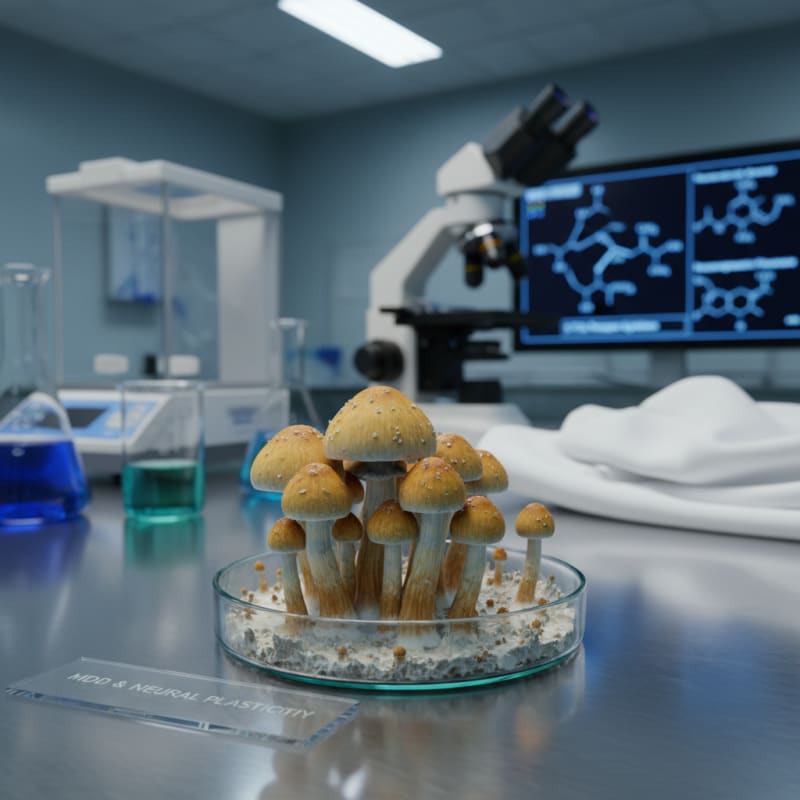

Psilocybin, a naturally occurring psychedelic compound found in certain mushrooms, has gained attention for its potential therapeutic applications, particularly in mental health. Recent research has investigated its effects on Major Depressive Disorder (MDD).
What is Major Depressive Disorder?
Major Depressive Disorder is a common and serious medical illness that negatively affects how you feel, the way you think, and how you act. MDD causes feelings of sadness and/or a loss of interest in activities you once enjoyed. It can lead to a variety of emotional and physical problems and can decrease your ability to function at work and at home. Individuals with MDD may experience:
- Persistent sad or irritable mood
- Loss of pleasure in usual activities
- Significant change in appetite or body weight
- Insomnia or hypersomnia
- Psychomotor agitation or retardation
- Fatigue or loss of energy
- Feelings of worthlessness or excessive guilt
- Impaired ability to think or concentrate; indecisiveness
- Recurrent thoughts of death or suicidal ideation
Traditional treatments for MDD often involve psychotherapy, antidepressant medications, or a combination of both. However, these treatments are not always effective for every individual, and some people experience significant side effects or partial remission of symptoms.
How is Psilocybin Being Studied for MDD?
Research studies on psilocybin for MDD often involve administering a controlled dose of the compound in a therapeutic setting. The focus is typically on acute, high-dose administrations under careful clinical supervision, rather than repeated self-dosing, which differs significantly from microdosing practices. The aim is to induce a psychedelic experience that, when integrated with psychological support, may lead to lasting improvements in mood and outlook.
These studies investigate the neurobiological mechanisms through which psilocybin might exert its effects. It's believed that psilocybin interacts with serotonin receptors in the brain, particularly the 5-HT2A receptor, potentially leading to increased neuroplasticity and alterations in default mode network activity. These changes could help break rigid thought patterns often associated with depression.
What Do Current Findings Suggest?
Preliminary findings from several clinical trials indicate that a single administration of psilocybin, combined with psychological support, can lead to rapid and sustained reductions in depressive symptoms for some individuals with MDD. The effects have been observed to last for several weeks or even months in some participants. It is important to note that these studies are conducted in highly controlled environments with extensive preparation and integration therapy. This approach is distinct from unsupervised use of psilocybin products. Understanding the difference between different forms and dosages is crucial, as described in Capsules, Chocolates, or Gummies?.
Further research is ongoing to understand the optimal dosing regimens, participant selection criteria, long-term efficacy, and safety profile of psilocybin as a potential treatment for MDD. The precise Certificate of Analysis (COA) for psilocybin products ensures transparency and allows for informed decisions based on lab-tested potency. Proper understanding of how potency is measured in the lab is also important for safe and accurate use.
The potential for psilocybin to offer a novel approach to treating MDD is an active area of scientific inquiry, with continued research needed to fully elucidate its role in mental healthcare.

ShroomDash Editorial Team
Published 2026-02-23 · 4 min read · Microdosing