
Will Psilocybin Show Up on a Standard Drug Test?
Quick Summary
Standard workplace drug tests (like 5-panel or 10-panel screens) do not test for psilocybin or its active metabolite, psilocin. Only specialized, expensive tests can detect them, and the detection window is very short, typically under 24 hours in urine, because the body metabolizes and excretes the compound rapidly.
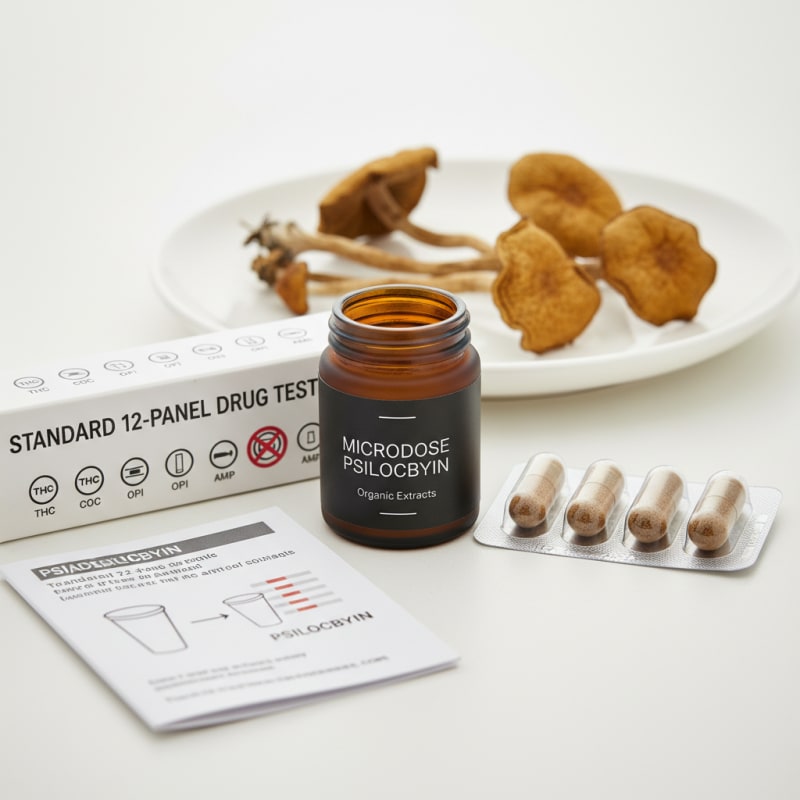
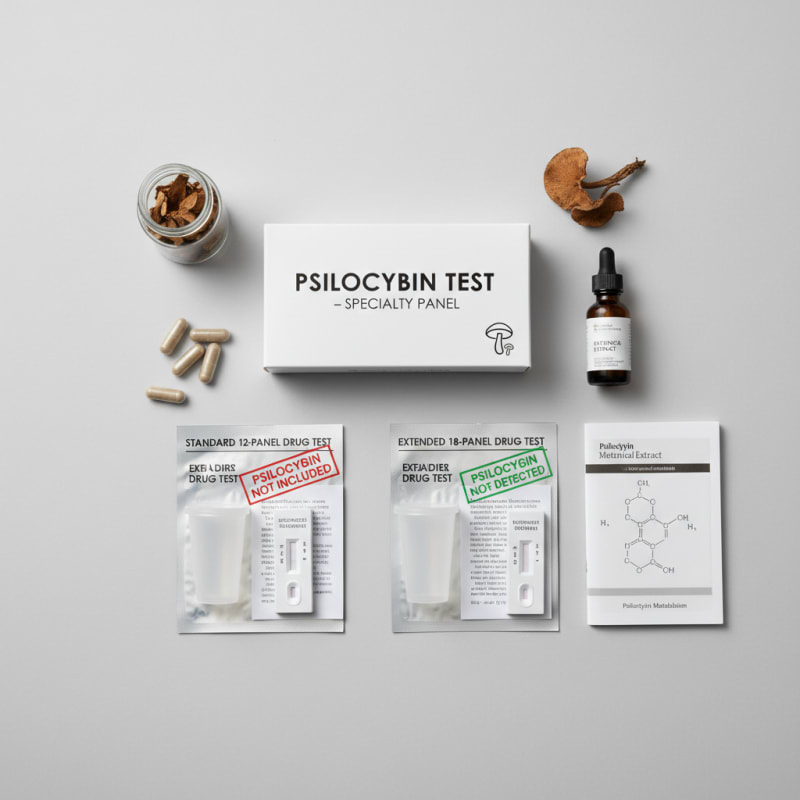
For many Canadians who use psilocybin, whether for therapeutic purposes or personal exploration, a common and practical question arises: can this use be detected by a standard drug test? This concern is especially relevant for those in professions with routine workplace screening. The straightforward answer is that psilocybin is not a substance that standard drug tests are designed to detect.
What Do Standard Drug Tests Actually Look For?
When most people refer to a "drug test," they are typically thinking of a 5-panel, 10-panel, or 12-panel urine screen—the kinds most commonly used by employers. These tests are designed to identify the metabolites of specific, widely recognized substances associated with impairment or illegal use. The compounds these panels test for are standardized and well-established.
Here’s a typical breakdown:
- 5-Panel Test: This is the most common screening used for employment. It targets:
- THC (Cannabinoids)
- Opiates (like heroin, morphine, and codeine)
- Cocaine
- Amphetamines (including methamphetamine and MDMA)
- Phencyclidine (PCP)
- 10-Panel Test: This is a more comprehensive screen that includes everything in the 5-panel test plus five additional substance classes:
- Barbiturates
- Benzodiazepines (like Xanax and Valium)
- Methadone
- Propoxyphene
- Quaaludes
As is evident from these lists, psilocybin and its active metabolite, psilocin, are conspicuously absent. An employer or testing agency would need to order a separate, specialized, and more expensive test specifically for hallucinogens to detect psilocybin use.
Why Isn't Psilocybin Included in Routine Screens?
The exclusion of psilocybin from standard panels isn’t an oversight; it’s a practical decision based on several key factors:
1. Rapid Metabolism and Short Detection Window: When ingested, psilocybin is quickly converted by the body into psilocin. This active compound is then rapidly metabolized and excreted. In most cases, psilocin is undetectable in urine after just 24 hours. This provides an extremely short window for detection compared to a substance like THC, which can remain detectable in urine for weeks.
2. Cost and Specificity of Testing: The technology used in standard drug screens is designed to find specific molecular structures. Psilocin’s structure is unique and does not trigger a positive result for any of the substances on a standard panel. Testing for it requires a different, more targeted process, such as gas or liquid chromatography-mass spectrometry (GC/MS or LC/MS). These tests are significantly more expensive and are not cost-effective for routine screening.
3. Low Profile in Workplace Settings: From a historical and public health standpoint, psilocybin has not been associated with the kind of workplace impairment or long-term abuse patterns seen with opioids, amphetamines, or alcohol. Therefore, employers have had little incentive to add it to their screening protocols. Even with a consistent microdosing regimen as outlined in our practical guide on how to microdose, the dosage levels are sub-perceptual and the compound is cleared quickly.
How Is Psilocybin Metabolized and Detected?
Understanding the metabolic pathway of psilocybin clarifies why it’s so difficult to detect. After you consume a product containing psilocybin, your digestive system and liver get to work.
- Dephosphorylation: The primary metabolic process is dephosphorylation, where an enzyme called alkaline phosphatase removes a phosphate group from the psilocybin molecule (C₁₂H₁₇N₂O₄P).
- Conversion to Psilocin: This process converts psilocybin (which is a prodrug) into psilocin (C₁₂H₁₆N₂O), the primary psychoactive compound responsible for its effects.
- Detection of Psilocin: It is this psilocin metabolite that any specialized drug test would be designed to find. After it produces its effects, psilocin is further broken down by the liver and the byproducts are excreted, primarily through urine.
The entire cycle from ingestion to full excretion is remarkably fast. While variables like body mass, metabolism, hydration, and the dose taken can slightly influence the timeline, the 24-hour window for urine detection is a reliable benchmark. Other testing methods, like hair follicle tests, could theoretically detect psilocybin for up to 90 days, but these tests are extremely rare, expensive, and almost never used for psilocybin.
Are There Any Tests That Can Detect Psilocybin?
Yes, tests that can detect psilocybin and psilocin do exist. However, their use is highly specific and uncommon. These specialized panels are typically reserved for situations requiring in-depth toxicological or forensic analysis, not for general employment or probation screening. They are purpose-built to look for hallucinogens and other less common substances. Whether you are using a macrodose of Golden Teacher Capsules or a structured microdose routine, the fundamental science of detection remains the same: it requires a specific, targeted, and non-standard test.
For most individuals, the primary concern is the standard workplace drug test. In that context, psilocybin use is not a detectable event. The rapid rate at which the body processes and clears the compound makes it a poor candidate for routine monitoring.
This rapid metabolism is one of the key properties that distinguishes psilocybin from many other controlled substances, influencing not only its detection but also its pharmacological profile. '

ShroomDash Editorial Team
Published 2026-02-24 · 4 min read read · Guides