Lab Testing for Mushroom Products: What a Real Certificate of Analysis Looks Like
Quick Summary
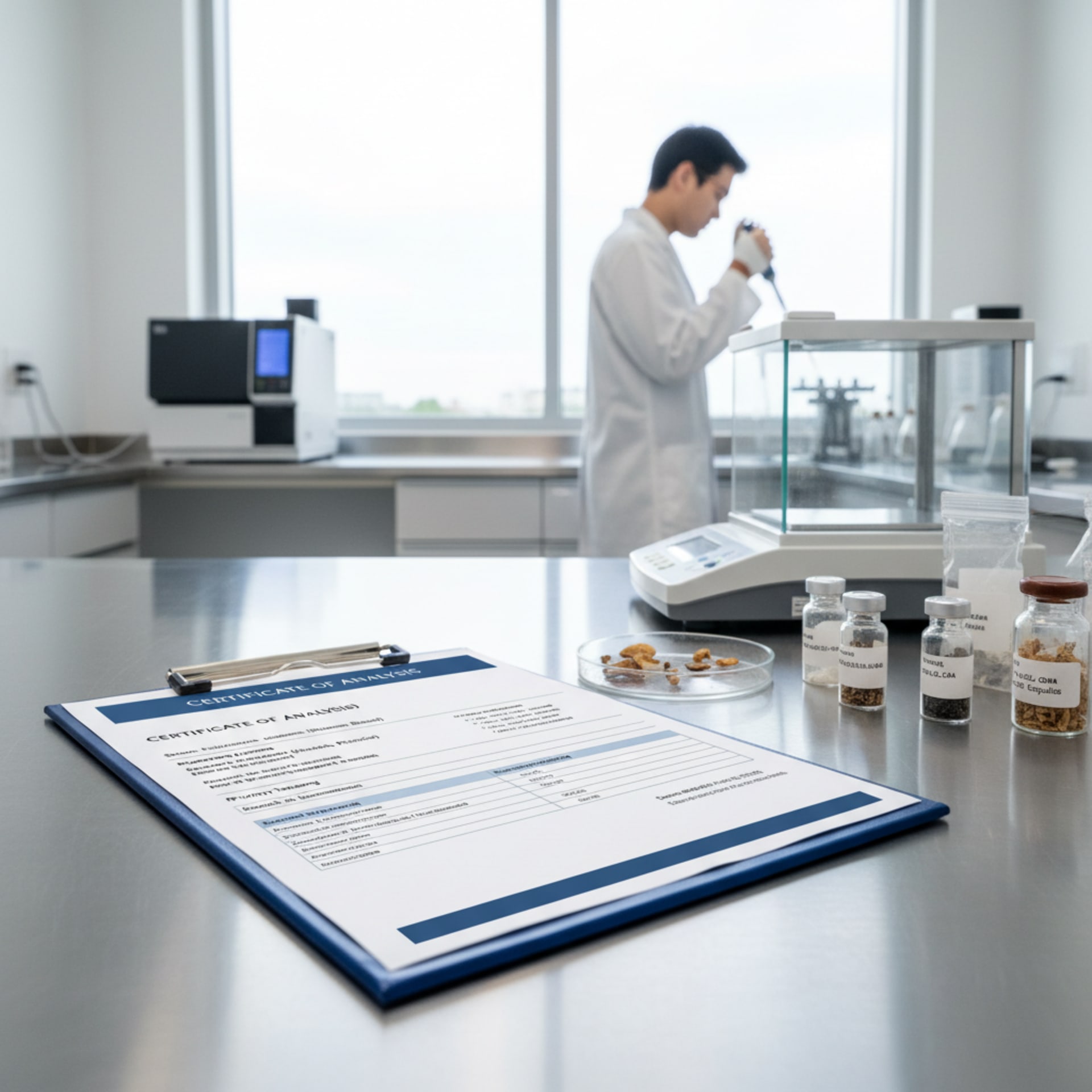
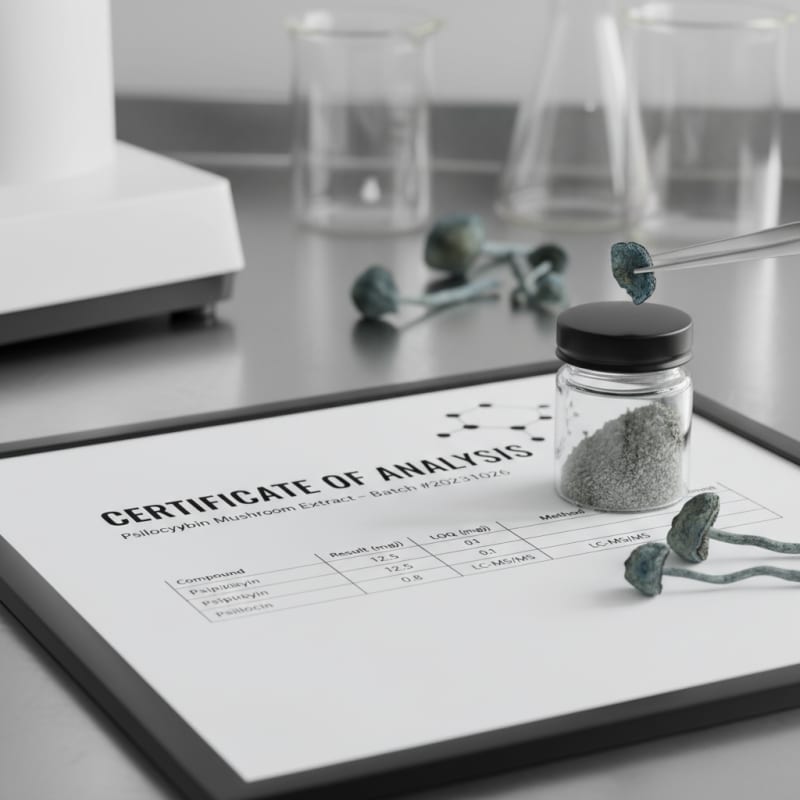
A real Certificate of Analysis for mushroom products includes laboratory identification, batch number, date of testing, analytical method, and potency results reported in milligrams per gram. Without these elements, verification is incomplete.

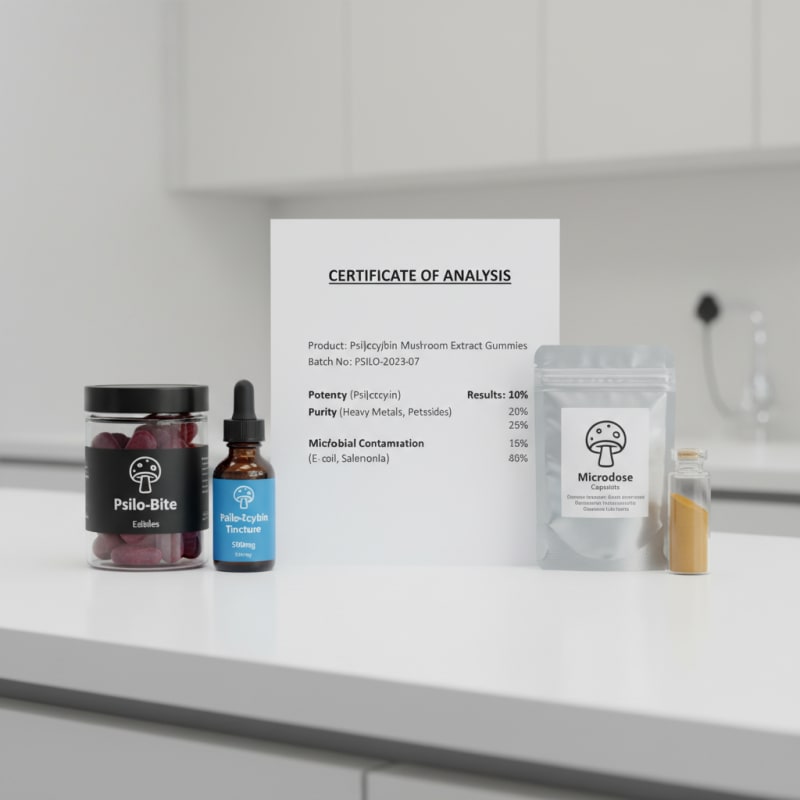
"Lab tested" is a claim.
A Certificate of Analysis is documentation.
The difference is procedural.
When a laboratory analyzes mushroom material, it does not estimate potency. It separates compounds using analytical chemistry methods such as High Performance Liquid Chromatography or Liquid Chromatography with Tandem Mass Spectrometry. Understanding how potency is measured provides context for interpreting these results.
The report generated from that analysis is called a Certificate of Analysis.
What Are the Core Components of a Real Certificate of Analysis?
A legitimate Certificate of Analysis for mushroom products includes:
- Laboratory name and credentials
- Unique sample identifier
- Batch or lot number
- Date received and date tested
- Analytical method
- Measured analytes
- Units of measurement
- Detection limits
If any of these elements are missing, traceability weakens.
What Does the Potency Section Show?
The potency section typically lists:
- Psilocybin (mg/g)
- Psilocin (mg/g)
Some reports include related compounds. Understanding the difference between psilocybin and psilocin helps interpret what each line on a Certificate of Analysis mushroom report actually represents.
Results expressed in milligrams per gram allow direct chemical calculation.
What About Contaminant Screening?
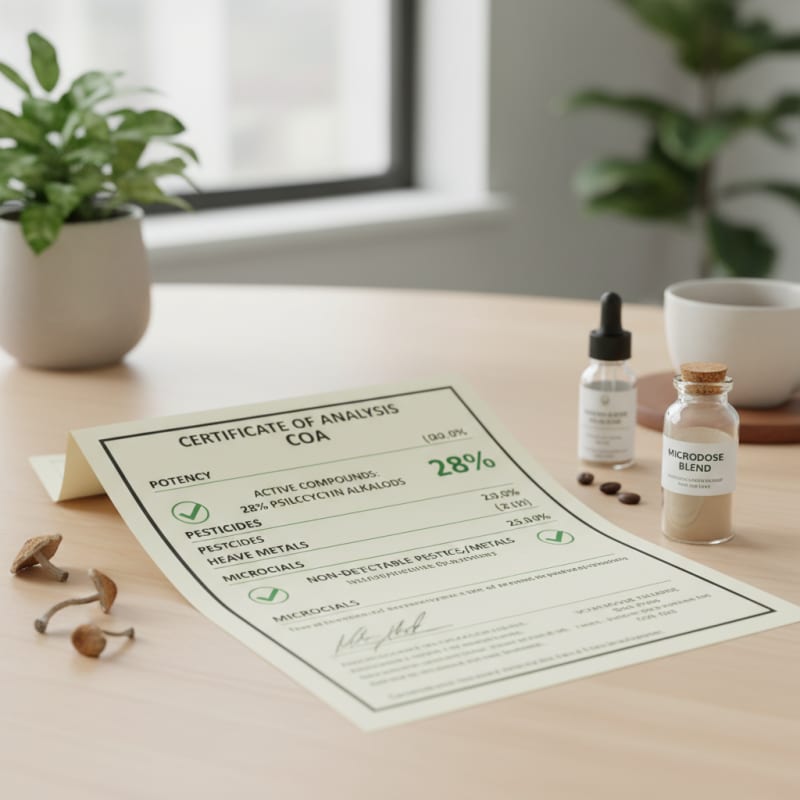
Depending on testing scope, reports may include:
- Heavy metals
- Microbial screening
- Pesticide analysis
- Residual solvents for extracts
Testing scope varies. Transparency requires clarity about what was and was not tested. This is one area where lab reports have limits.
What Are the Sampling Limitations of a COA?
A Certificate of Analysis reflects the submitted sample. It does not guarantee every capsule or chocolate square is chemically identical unless proper homogenization and batch sampling procedures were followed.
Dosing consistency depends on manufacturing process, not just testing. A COA confirms what was measured. It does not confirm what was not submitted.
Documentation improves transparency. It does not eliminate biological variability.
Measurement defines accountability.

ShroomDash Editorial Team
Published 2026-02-20 · 6 min read · Lab Science