Microdosing: A Practice, Not Just a Substance
Quick Summary
Recent research shows millions of adults microdose psilocybin, but even more microdose cannabis. This suggests "microdosing" is evolving from a substance-specific term into a broader wellness practice, where the method of taking small, regular doses is applied to different compounds for subtle benefits.
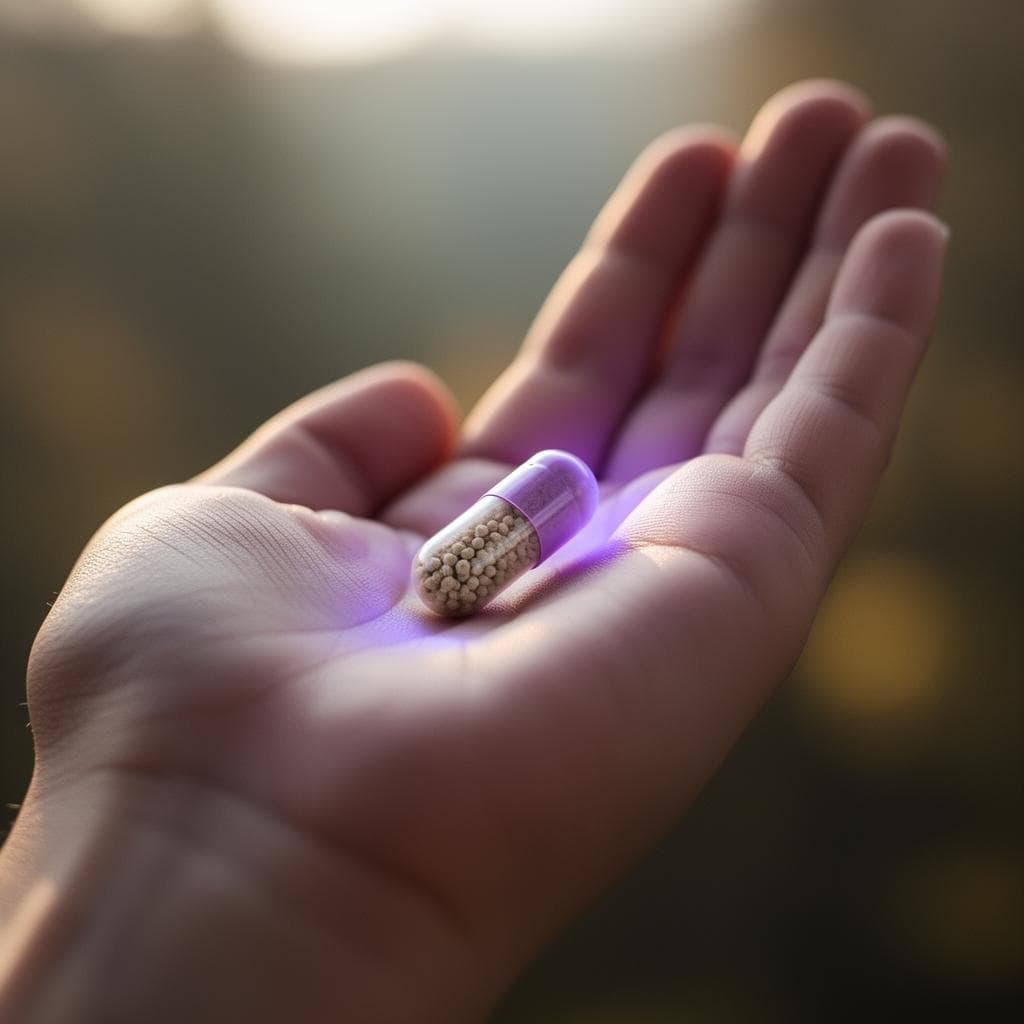
The term "microdosing" has become closely associated with psilocybin. It typically refers to the practice of taking a sub-perceptual dose, around one-tenth to one-twentieth of a standard recreational amount, to enhance mood, creativity, or focus without producing an altered state of consciousness. This practice is a cornerstone of the modern wellness movement surrounding psychedelics, representing a shift from infrequent, high-dose experiences to regular, integrated regimens.
However, recent data suggests that the public's understanding and application of microdosing may be evolving faster than the conversation around it. While psilocybin remains central to the discussion, emerging research indicates that people are applying the *concept of microdosing to other substances. This suggests a broader trend where the methodology—taking small, intentional doses for subtle, functional benefits—is becoming a wellness practice in its own right, independent of any single substance.
How Widespread is Psilocybin Microdosing?
For years, the prevalence of microdosing was based on anecdotal reports and community surveys. More recently, formal research has begun to provide a clearer picture. A 2026 study from the RAND Corporation offered one of the first comprehensive looks at the practice among U.S. adults. The findings confirm that microdosing is a significant aspect of psilocybin use.
According to the study, among adults who had used psilocybin in the past year, approximately two-thirds reported microdosing at least once. This is a substantial figure, indicating that most people who engage with psilocybin are at least experimenting with smaller doses. The data on use frequency is even more revealing:
- Of the more than 200 million days of psilocybin use reported by survey participants, nearly half involved microdosing.
- This means that in terms of sheer volume and frequency, microdosing accounts for a massive portion of overall psilocybin consumption.
This data challenges the media's heavy focus on high-dose "trips." While transformative psychedelic experiences are a valid and important part of psilocybin use, the day-to-day reality for many involves consistent, low-dose regimens. This is a quiet but powerful trend, often managed with precisely measured products like our Balance Blend Microdose Capsules. The consistency and discretion of such formats are well-suited for a regular wellness routine, a topic we explore further in Psilocybin's Two Narratives: Clinical vs. Wellness.
Where Does Cannabis Fit into the Picture?
Just as the data began to solidify psilocybin's role in the microdosing landscape, another study introduced a surprising variable: cannabis. Research from the University of California, San Diego, revealed that microdosing cannabis is significantly more common than microdosing psilocybin. The study, published in the *American Journal of Preventive Medicine, found that nearly 10% of U.S. adults—about 24 million people—have microdosed cannabis. In comparison, roughly 5% reported microdosing psilocybin.
This finding is remarkable because cannabis is not typically classified as a classic psychedelic. Its primary psychoactive compound, THC, interacts with the body's endocannabinoid system, a different neural pathway than the serotonin receptors targeted by psilocybin. Yet, millions of people are independently adopting the "microdosing" framework and applying it to cannabis products.
The goals cited by cannabis microdosers are often identical to those in the psilocybin community: reducing anxiety, improving focus, and managing mood without significant cognitive impairment. This parallel suggests that the public is less concerned with pharmacological definitions and more interested in the practical outcome of a low-dose regimen. People are taking a concept born in the psychedelic space and applying it to a more legally accessible and familiar substance to achieve similar functional goals.
Is "Microdosing" a Universal Wellness Method?
The combined data from these studies points toward a compelling evolution. "Microdosing" appears to be transitioning from a substance-specific term into a broader, substance-agnostic wellness strategy. The core principle is not necessarily about the unique properties of psychedelics, but about the user's intent to modulate their consciousness in a subtle, sustained, and functional way.
This user-driven trend contrasts sharply with the formal, clinical research model. Institutions like the Johns Hopkins Center for Psychedelic and Consciousness Research are primarily focused on high-dose, therapeutically guided sessions for treating specific medical conditions. This clinical framework treats psilocybin as a powerful tool for inducing a profound experience that acts as a catalyst for therapy. The wellness model, as evidenced by the prevalence of microdosing, treats it as a daily supplement for ongoing self-improvement. Edible products, such as precisely-dosed mushroom chocolates or gummies, are a direct response to this consumer demand for manageable, repeatable experiences. Whether for psilocybin or cannabis, the market for products like mushroom gummies is growing because users are pursuing this method.
The rise of cannabis microdosing shows that the practice can be decoupled from psilocybin. It has become a distinct methodology defined by dose and intent rather than the substance itself. Users are not just seeking a psychedelic effect; they are adopting a strategic approach to consumption that prioritizes subtle enhancement over profound alteration.
The language and practice of microdosing are clearly expanding. While its roots are firmly in the world of psychedelics, its branches now extend to other compounds, driven by individuals seeking functional control over their well-being. This behavior indicates that for many, the appeal of microdosing lies in the method, not just the molecule.

ShroomDash Editorial Team
Published 2026-05-06 · 4 min read read · Microdosing