
Microdosing: The Unseen Majority
Quick Summary
Headlines focus on high-dose, clinical psilocybin therapy, but recent data shows this is not how most people use it. A 2026 RAND study revealed two-thirds of psilocybin users microdose, making it the most common form of use. This article explores the disconnect between the dramatic media narrative and the reality of frequent, low-dose wellness use.


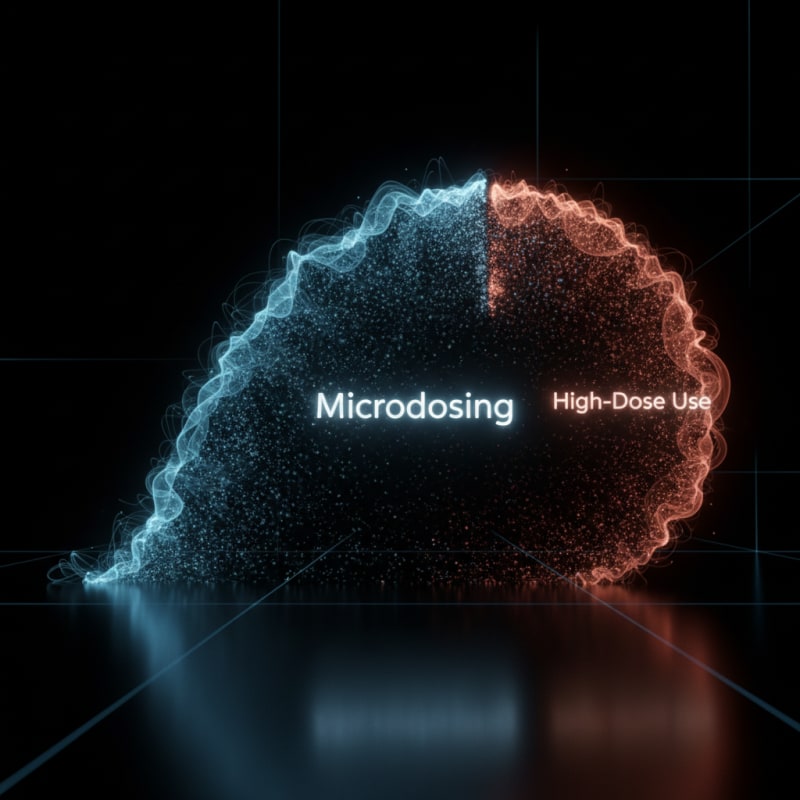

Recent data reveals a significant disconnect between the public perception of psilocybin use and its real-world application. While media headlines and clinical research tend to focus on high-dose, medically supervised therapeutic sessions, a quiet majority of users are engaging with psilocybin in a completely different manner: microdosing. This frequent, sub-perceptual practice is now understood to be the most common way people use psilocybin, a reality that is largely absent from the mainstream narrative.
A 2026 study from the RAND Corporation provided a first-of-its-kind look into the prevalence of microdosing, finding that an estimated two-thirds of adults who used psilocybin in the past year had microdosed. The report also found that of the more than 200 million days of psilocybin use, nearly half involved microdosing. This data suggests that for every individual undergoing a profound, high-dose journey in a clinical setting, there are many more integrating small, non-intoxicating amounts of psilocybin into their regular routines.
How Is Psilocybin Portrayed in Research and Media?
The dominant narrative surrounding psilocybin is one of powerful, life-altering experiences. This is largely shaped by the important work being done at institutions like the Johns Hopkins Center for Psychedelic and Consciousness Research. Their studies focus on the therapeutic potential of high-dose psilocybin to treat conditions such as severe depression, anxiety in cancer patients, and addiction. These sessions are characterized by:
High Doses: Sufficient to produce a strong psychedelic effect, including profound shifts in consciousness, perception, and emotion. Medical Supervision: Administered in a controlled clinical setting with trained facilitators or therapists present. Intensive Preparation and Integration: Involving extensive psychological support before and after the session to help patients process their experience.
This clinical model is essential for establishing safety and efficacy for medical applications. The media, in turn, is naturally drawn to these dramatic and transformative stories. Headlines often highlight the "mystical experiences" and breakthroughs in treating mental illness. Conversely, some coverage, like a recent Washington Post opinion piece, can adopt an alarmist tone about unsupervised use, creating a polarized public discourse that oscillates between miracle cure and dangerous drug.
What Does Real-World Data Show?
The data on actual use paints a far more nuanced picture. The RAND study highlights that the most common interaction with psilocybin is not a rare, intense trip, but a regular, subtle adjustment. Millions of users are not seeking to "trip" at all. Instead, they are microdosing—taking about 5-10% of a standard recreational dose.
The motivations for this type of use differ significantly from the goals of high-dose therapy. While clinical trials aim to resolve deep-seated trauma or illness, microdosing is typically self-directed for ongoing wellness and performance enhancement. Users often report benefits such as:
Improved mood and emotional regulation Enhanced creativity and problem-solving abilities Increased focus and productivity Reduced anxiety and stress
This form of use is less about a single, monumental event and more about a sustained practice, much like a nutritional supplement or mindfulness routine. It reflects a silent revolution in how people are approaching mental wellness, a topic we have explored in our post on microdosing in the workplace.
Why Does This Disconnect Exist?
The gap between the research narrative and real-world behaviour isn't a conspiracy; it stems from practical realities. Clinical research on microdosing is notoriously difficult. The effects are subtle and can be hard to distinguish from placebo in a controlled study, whereas the effects of a high dose are unmistakable. Funding and regulatory bodies therefore tend to favour the high-dose model, as it produces more easily measurable and dramatic outcomes.
Furthermore, the logistics of studying long-term microdosing are complex. It requires tracking many participants over extended periods, which is costly and difficult to manage. For many users, precision and consistency are key to a successful microdosing regimen. Products like ShroomDash's Brain Boost Microdose Capsules are designed specifically for this purpose, offering precisely measured doses of *Psilocybe cubensis in a convenient format. This allows for a consistent routine without the variability of whole mushrooms. You can explore our full range of professionally prepared capsules here.
The media follows the research. A headline about psilocybin curing depression is more compelling than one about it helping someone feel slightly more creative. This creates a feedback loop where the clinical, high-dose narrative is amplified, while the more common, low-dose reality remains largely invisible.
What Does This Mean for the Average User?
Understanding this disconnect is critical for anyone exploring psilocybin. The information, protocols, and expectations for a high-dose therapeutic session are fundamentally different from those for a microdosing regimen. Someone interested in microdosing will find little relevant guidance in a news story about psilocybin-assisted therapy for PTSD.
Users should seek information that aligns with their specific intentions. If your goal is to explore microdosing, your focus should be on:
Dosage Calibration: Finding the right sub-perceptual dose for your individual sensitivity. Scheduling Protocols: Learning about common schedules, such as the Fadiman Protocol (one day on, two days off) or the Stamets Protocol. Journaling and Tracking: Paying attention to subtle changes in mood, focus, and creativity over time.
As interest in low-dose psilocybin grows, product formats are evolving to meet user needs. For those who prefer a tastier option, ShroomDash's Focus Gummies offer the same precision as capsules in a convenient and palatable chew. The key is finding a reliable product that fits your lifestyle. You can browse all product formats on our main shop page.
The growing body of data on real-world use patterns highlights that the most common interaction with psilocybin is not a rare, high-intensity event, but a frequent, low-intensity one. This fact is largely absent from the dominant public and scientific narratives, but it is the reality for millions of people.

ShroomDash Editorial Team
Published 2026-04-20 · 4 min read read · Microdosing