
Microdosing: Common Use vs. Clinical Research
Quick Summary
A recent RAND study shows microdosing is extremely common, accounting for about half of all psilocybin use days. This contrasts sharply with scientific research, which prioritizes high-dose clinical trials for treating specific disorders. This gap means most user knowledge is community-driven rather than formally studied.


A landmark 2026 study from the RAND Corporation has provided a clear, data-driven picture of how psilocybin is being used today—and the results highlight a significant disconnect between scientific research and real-world application. The report, a first-of-its-kind survey on psychedelic use, found that microdosing is not a niche activity but a primary method of consumption. This data confirms what many have long suspected: the most common way people use psilocybin is also one of the least formally studied.
Researchers discovered that among adults who had used psilocybin in the past year, roughly two-thirds had microdosed at least once. More strikingly, of the more than 200 million days of psilocybin use reported, nearly half involved microdosing. These figures stand in stark contrast to the dominant narrative in media and science, which overwhelmingly focuses on high-dose, therapeutically guided sessions. While clinical trials grab headlines, the reality for millions of users involves taking small, sub-perceptual amounts in an everyday context.
How Common Is Microdosing, Really?
The scale of microdosing is larger than many experts previously assumed. The RAND study estimates that 11 million U.S. adults used psilocybin in 2025, and a significant portion of this use was microdosing. The finding that this practice accounts for nearly 50% of total use days suggests that for many, psilocybin is not a once-a-year "trip" but a more regular, integrated part of a wellness or productivity routine. This pattern of consumption is fundamentally different from the high-dose model and has its own distinct set of intentions, outcomes, and risk profiles.
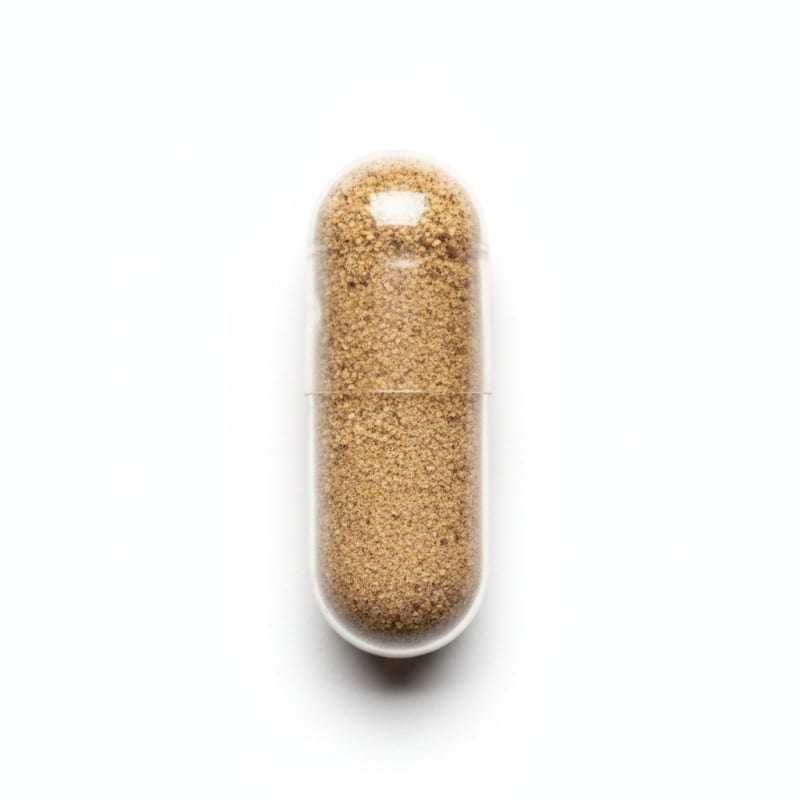
This widespread, unsupervised use has evolved almost entirely outside of formal medical and scientific frameworks. Knowledge is passed through community forums, anecdotal reports, and articles like this one. This has led to the development of established, community-vetted protocols, such as James Fadiman's one-day-on, two-days-off schedule. However, it also means that users rely on self-monitoring and products that provide consistency and reliability. The popularity of precisely measured products, like those available in our mushroom capsules shop, is a direct response to the need for dosage accuracy in a practice defined by its subtlety.
When engaging in a sub-perceptual routine, the goal is to avoid any noticeable psychoactive effects. This requires a level of precision that is difficult to achieve with raw, dried mushrooms, whose potency can vary significantly. Standardized products allow users to confidently manage their intake and track effects over time, which is critical in a field where formal data is still scarce.
Why Does Research Focus on High Doses?
If microdosing is so common, why does the vast majority of well-funded, institutional research—such as that conducted at the Johns Hopkins Center for Psychedelic and Consciousness Research—focus on high-dose sessions? The answer lies in the objectives and methodologies of clinical science.
- Clear, Measurable Outcomes: High-dose psilocybin induces profound, often mystical-type experiences. These are powerful, acute events whose effects on mood, cognition, and behavior can be measured against a baseline. In studies on smoking cessation or treatment-resistant depression, a high-dose session acts as a potent catalyst for change within a therapeutic framework. The effects are dramatic and easier to isolate in a controlled trial.
- Therapeutic Model: The current research paradigm is built around a medical model: treating a specific diagnosis. High-dose psilocybin-assisted therapy is being investigated for serious conditions like major depressive disorder, end-of-life anxiety for cancer patients, and substance use disorders. You can read more about this distinction in our post on high-dose vs. microdose models for addiction.
- Logistical Feasibility: A clinical trial based on one or two high-dose sessions is more practical to run than a long-term study trying to measure the subtle, cumulative effects of microdosing over several months. The latter requires more complex tracking and faces challenges in controlling for placebo effects and other lifestyle variables.
This research is incredibly valuable, but it investigates psilocybin use in a highly structured, supervised context that bears little resemblance to the way millions of people are actually using it. The clinical model prioritizes safety through screening and professional guidance, a resource unavailable to the average at-home user. For this reason finding a reliable product is a primary concern for many. Our Clarity Microdose Capsules, containing a balanced blend of *Psilocybe cubensis and Lion's Mane, are formulated to provide a consistent and predictable experience for those managing their own microdosing regimen.
What Does This Prevalence Gap Mean?
The gap between how psilocybin is studied and how it is used has important implications. The focus on high-dose therapy means there is a lack of formal scientific data on the real-world benefits and risks of long-term microdosing. While anecdotal reports often cite benefits like improved mood, enhanced creativity, and reduced anxiety, these have not been consistently validated in rigorous, large-scale placebo-controlled studies.
This leaves users to navigate the space with guidance from the community. It elevates the importance of product quality, dosage consistency, and personal responsibility. For individuals who use psilocybin as part of a wellness routine, having access to lab-tested, accurately dosed products is not just a matter of convenience—it is a critical component of safety and efficacy. When dosing at a sub-perceptual level, knowing that each capsule contains exactly what it claims to allows for meaningful self-assessment. For a different focus, many users also report positive effects from our Connect Microdose Capsules, which are formulated to enhance social connection and presence.
It is possible that as more data on the prevalence of microdosing becomes available, research priorities will shift. Future studies may be designed to better reflect real-world use patterns, exploring the long-term effects of low-dose, intermittent psilocybin consumption on a generally healthy population. Until then, the practice will likely continue to be defined by the collective experience of its many millions of participants.

ShroomDash Editorial Team
Published 2026-03-27 · 4 min read read · Microdosing