
Media vs. Reality: Psilocybin Use in the Wild
Quick Summary
Recent studies show that microdosing is the most common way people use psilocybin, accounting for nearly half of all use days. This contrasts sharply with media and research narratives that tend to focus on infrequent, high-dose therapeutic sessions, creating a disconnect in public perception.
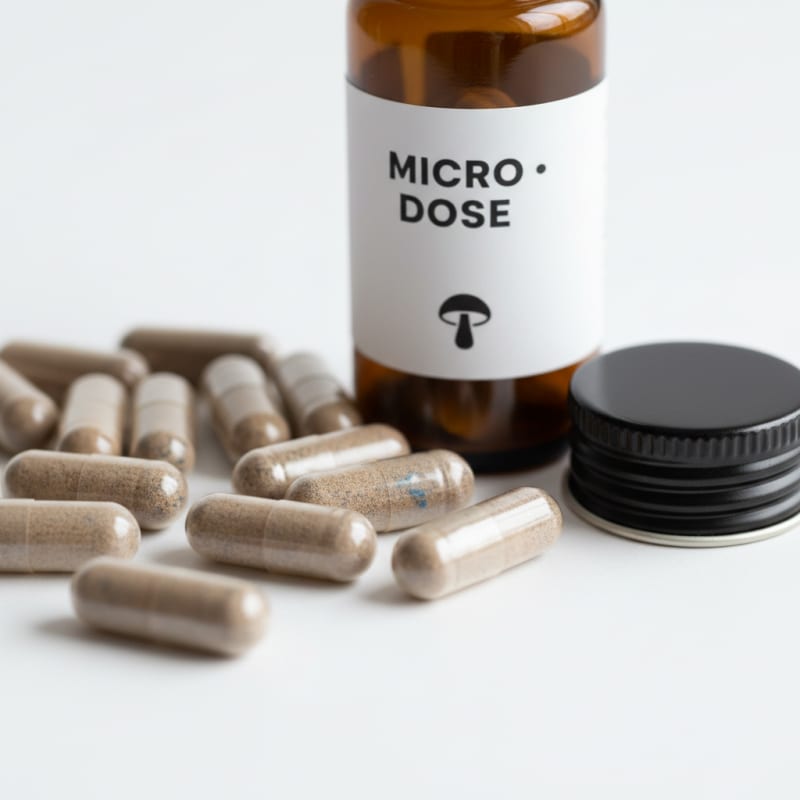



The public perception of psilocybin is often shaped by two distinct narratives. On one hand, there are exciting headlines about high-dose, psilocybin-assisted therapy showing promise for treating severe conditions like addiction and depression. On the other, cautionary articles warn of the supposed risks of new trends like microdosing. What’s missing from this picture is the quiet reality of how most people actually use psilocybin.
Recent data from organizations like the RAND Corporation paints a very different picture from the one in the media. A 2026 study revealed that for every two people who used psilocybin in the past year, one of them reported microdosing. In fact, of the more than 200 million days of psilocybin use reported, nearly half involved microdosing. This suggests that for a significant number of users, psilocybin is not a rare, life-altering trip but a regular, non-perceptual wellness tool.
Why Do Headlines Focus on High-Dose Studies?
News media and clinical research have a natural affinity for dramatic, measurable results. A high-dose psilocybin session conducted in a controlled, therapeutic environment provides a clear variable to study. A recent NPR report on psilocybin helping smokers quit is a perfect example. In these studies, participants undergo a carefully managed experience designed to produce a profound psychological shift, which researchers can then link to a specific outcome, like smoking cessation.
These clinical protocols are rigorous and resource-intensive, involving extensive screening, psychological support, and a carefully controlled set and setting, which is foundational to the therapeutic model. The results can be groundbreaking, offering new hope for difficult-to-treat conditions. This makes for compelling science and equally compelling headlines. However, this research framework, by its very nature, doesn't capture the more subtle, long-term, and patient-led use patterns happening outside the lab.
Key characteristics of high-dose clinical research include:
High Doses: Administering enough psilocybin to induce a powerful psychoactive experience. Controlled Environment: A clinical setting designed for safety and to guide the experience. Therapeutic Support: Guidance from trained professionals before, during, and after the session. Specific Goals: Targeting a measurable clinical outcome, such as the reduction of depressive symptoms or addictive behaviours.
This focus is essential for advancing medical science, but it inadvertently eclipses the far more common, low-dose applications.
What Does the Data Say About Real-World Use?
The data on real-world psychedelic use indicates that the dominant paradigm is not the occasional high-dose journey, but the regular, low-dose routine. The RAND study’s finding that nearly half of all psilocybin use days are microdosing days is a critical piece of information. It reframes psilocybin as a substance an increasing number of people are integrating into their daily or weekly lives for goals like enhanced focus, emotional regulation, and creativity.
This type of use is far more mundane and therefore less newsworthy. It aligns more with taking a daily supplement than undergoing a major medical procedure. The most common product format for this is capsules, which provide a precise, reliable, and convenient way to manage a microdosing protocol. Products like Clarity Pro Microdose Capsules are designed for this exact purpose, offering a consistent 100mg of *Psilocybe cubensis per capsule and removing the guesswork and variability of raw mushrooms. This precision is essential for users seeking consistent, non-perceptual effects as part of a long-term routine.
How Does This Disconnect Affect Public Perception?
The gulf between the clinical/media narrative and the reality of user data can lead to significant confusion. Opinion pieces, like a recent one in The Washington Post expressing alarm over the microdosing trend, often arise from a perspective that primarily views psychedelics through a high-dose, high-risk lens. When the only widely discussed models are for treating severe psychiatric conditions, the idea of millions of people using psilocybin for everyday performance and well-being can seem strange or reckless.
This narrative disconnect can be problematic.
It can create unnecessary fear: Framing microdosing as an unsupported, risky trend ignores the vast amount of anecdotal evidence and emerging data suggesting it's viewed as a wellness tool by millions. It misrepresents user intent: Most microdosers are not seeking a psychoactive experience. Their goal is subtle, sub-perceptual change, a nuance often lost in broader media coverage. It overlooks innovation in product formats: The market has evolved to meet user needs with products that bear little resemblance to the raw mushrooms used in many clinical trials. Integrated formats like gummies and chocolates are becoming increasingly popular. For those who prefer a more integrated daily habit, edibles such as Focus Fuel Mushroom Gummies combine a non-perceptible psilocybin dose with other functional ingredients, further blurring the line between a 'psychedelic' and a wellness supplement.
The discrepancy between the media narrative and user data highlights two parallel worlds of psilocybin: the high-stakes clinical frontier and the widespread, low-dose wellness practice. As data becomes more robust, these two narratives will likely continue to evolve.

ShroomDash Editorial Team
Published 2026-04-24 · 4 min read read · Dosing