
Measuring Mushroom Use: Trips vs. Regimens
Quick Summary
The common perception of psilocybin use is the occasional high-dose "trip," often for therapeutic purposes. However, recent data reveals a different story: nearly half of all psilocybin use days involve microdosing, suggesting it's more commonly used as a regular supplement than a rare, intense experience.


The public conversation around psilocybin is often dominated by the concept of the "trip"—a powerful, hours-long psychedelic experience intended to produce profound psychological shifts. This model, heavily informed by clinical research into addiction and depression, portrays psilocybin as a substance used for rare but potent therapeutic interventions. While this high-dose framework is valid and important, recent data suggests it only tells half the story.
A more nuanced picture is emerging, one where psilocybin is used less like a surgical tool for the psyche and more like a daily supplement. This reality is not defined by transformative trips but by subtle, consistent, and sub-perceptual regimens. The key to understanding this lies not just in who is using psilocybin, but how they are using it, day by day.
What Does "A Dose" Even Mean?
The term "dose" is context-dependent. In the setting of a clinical trial or a guided psychedelic session, a dose is significant. For example, studies on smoking cessation have used doses of 20mg and 30mg of psilocybin per 70kg of body weight, which is enough to induce a powerful psychoactive experience. This is often called a macrodose.
The intent behind a macrodose is to facilitate a temporary dissolution of ego and a profound shift in perspective, which can help individuals break free from entrenched patterns of thought and behaviour. The experience is the therapeutic mechanism.
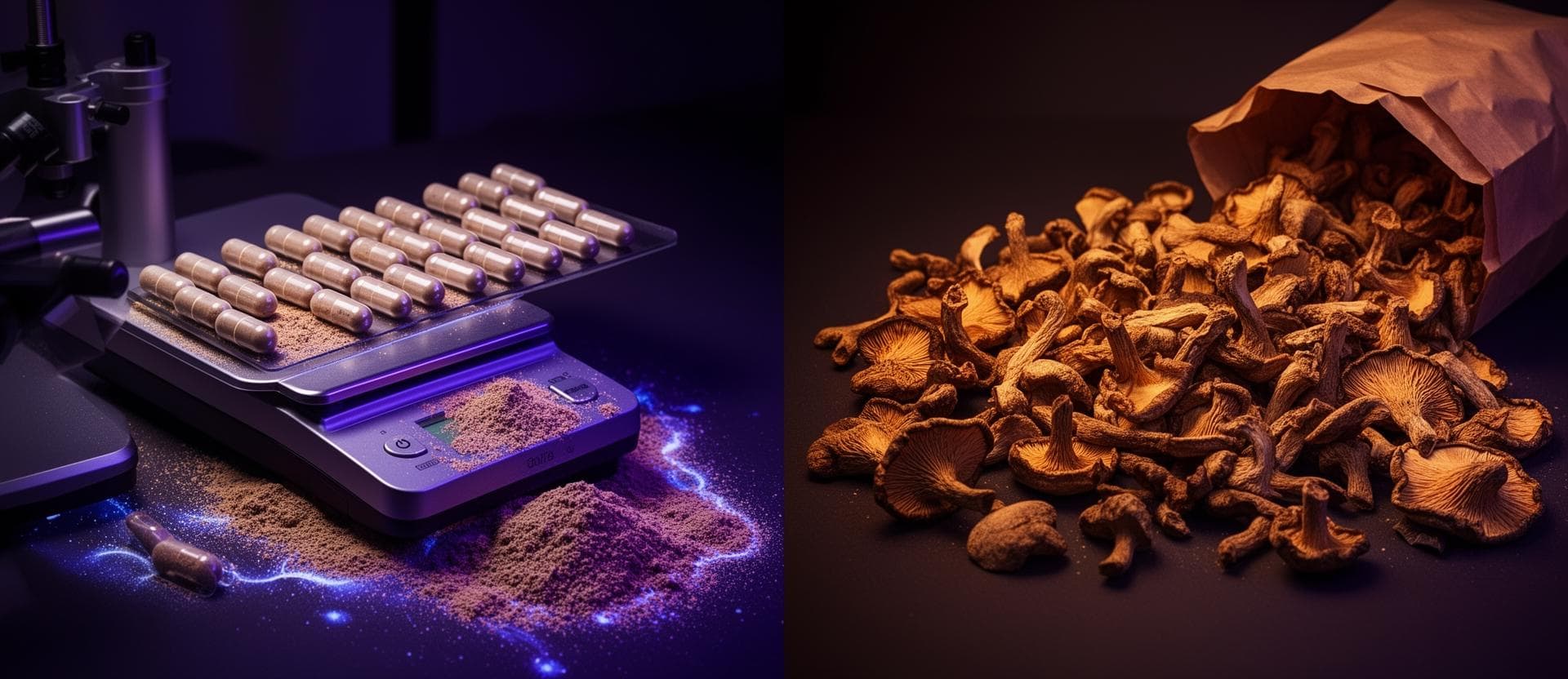
Conversely, a microdose operates on a completely different principle. A microdose is sub-perceptual, meaning it does not produce a noticeable psychedelic effect. Typically, this involves consuming anywhere from 50 to 250 milligrams of dried *Psilocybe cubensis mushroom—a tiny fraction of a macrodose. The goal is not to have an "experience" but to leverage the subtle neurological effects of psilocybin over time to enhance mood, creativity, or focus. This approach frames psilocybin as a consistent part of a wellness routine, akin to a vitamin or herbal supplement. Products like pre-measured psilocybin capsules are designed specifically for this type of use.
How Do Researchers Measure Psilocybin Consumption?
Historically, understanding substance use has focused on counting the number of users. While this metric is useful, it’s a blunt instrument. It tells us how many people have tried a substance within a given timeframe, but it reveals nothing about the frequency, quantity, or manner of use. An individual who tried psilocybin once at a festival is counted the same as someone who microdoses five days a week.
More recent and sophisticated analyses, like a first-of-its-kind 2026 RAND Corporation study, have begun to measure consumption in a more revealing way: by "days of use." This metric provides a much clearer view of consumption patterns. It helps distinguish between widespread but infrequent use and more concentrated, regular use. By looking at the total number of days psilocybin was consumed across a population, researchers can see the true prevalence of different use styles, like microdosing regimens versus occasional macrodosing.
What Does the Data Reveal About How People Use Psilocybin?
The findings from the RAND study are a crucial correction to the dominant narrative. According to the research, which surveyed use in 2025, psilocybin was used on over 200 million days by adults in the United States.
The most significant finding was how that use was divided:
- Nearly half of all use days involved microdosing. This single statistic fundamentally reframes the conversation. It suggests that for every day someone is taking a "trip dose," another person is taking a sub-perceptual microdose as part of a structured routine.
- Approximately two-thirds of past-year users reported microdosing at least once. This shows that microdosing is not a niche activity confined to a small subset of users. It is a common practice among the majority of people who consume psilocybin.
This data indicates that while the high-dose experience gets the most attention, the quiet, consistent practice of microdosing constitutes a massive portion of total psilocybin consumption. For many, psilocybin is not a rare event but a regular wellness tool. This reality is reflected in the demand for products that offer precision and consistency. Our Mindful Microdose Capsules, for example, provide a calibrated 100mg of *Psilocybe cubensis, removing the guesswork and facilitating a stable routine.
Why Is There a Disconnect Between Data and Perception?
The gap between the reality of psilocybin use and the public’s perception of it is largely a product of what makes a good story. A high-dose psilocybin session that helps a lifelong smoker quit is a dramatic and compelling narrative, as seen in reports from outlets like NPR. It’s a story of transformation, with a clear beginning, middle, and end. Similarly, opinion pieces warning of an "alarming trend" generate clicks through fear and controversy, even if they lack data.
Routine-based microdosing, by contrast, is a far less dramatic story. There is no single, life-altering event. The benefits, if realized, are gradual and cumulative. It’s a story of subtle, persistent effort, which doesn’t capture headlines in the same way. The user is not a patient undergoing a radical therapy but a proactive individual managing their own mental and emotional wellness. For those who prefer a more flexible approach than capsules, products like our Dark Chocolate Squares can be easily divided, allowing for tailored doses that fit a specific daily or weekly regimen. You can learn more about how the active compounds work by reading our article on psilocybin vs. psilocin explained.
The data does not diminish the importance of high-dose therapeutic work. Instead, it provides a vital layer of context. It shows that the psychedelic landscape is far more diverse than media portrayals suggest, with millions of people engaging with these substances in a deliberate and measured way.
As the data shows, the story of psilocybin in the wild is not just about a few transformative trips. It is a story of millions of individual days, many of which start with a simple, sub-perceptual capsule, representing a quiet but significant shift in how people approach mental wellness.

ShroomDash Editorial Team
Published 2026-04-27 · 4 min read read · Dosing