What Lab Reports Do Not Show About Mushroom Products
Quick Summary
A lab report is a chemical snapshot of one sample at one point in time. It does not confirm batch uniformity, post-test storage conditions, or portion-to-portion consistency in edible products.
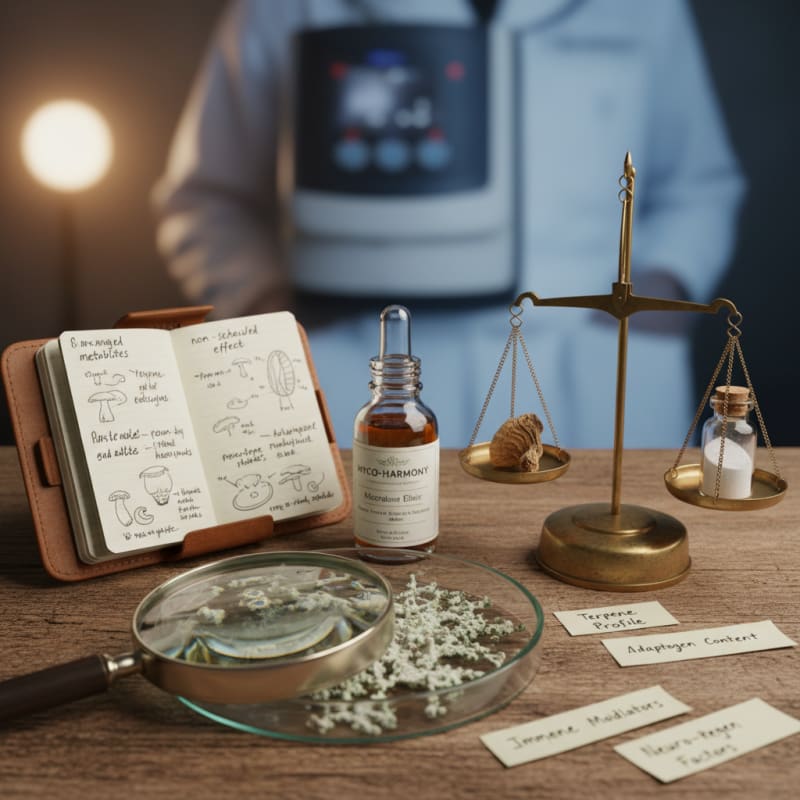
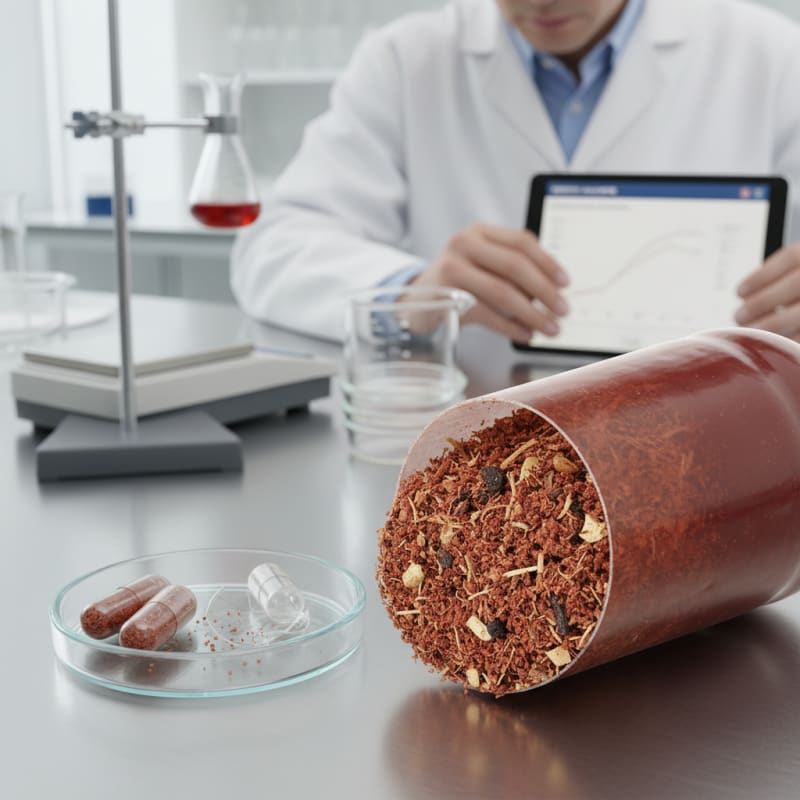

A Certificate of Analysis provides numbers.
It does not provide context.
When a laboratory tests a mushroom product, it analyzes a submitted sample. The report reflects the chemical composition of that specific sample at the time it was tested.
It does not automatically confirm uniformity across every unit in a batch.
Why Does Sampling Matter?
| Covered by COA | Not Covered by COA |
|---|---|
| Psilocybin concentration (mg/g) | Batch-wide uniformity |
| Psilocin concentration (mg/g) | Post-test storage conditions |
| Contaminant screening results | Cultivation method or substrate |
| Date and method of analysis | Portion-to-portion consistency |
| Laboratory accreditation | Future batch equivalence |
Sampling matters. If material was not properly homogenized before testing, the lab result may not represent the entire batch evenly. This is especially relevant for whole dried mushrooms, where potency can vary between caps and stems.
How potency is measured depends on what was submitted to the lab and how the sample was prepared. If the submitted sample was not representative, the result reflects a subset — not the whole.
What Happens After Testing?
Storage conditions also matter. A lab report reflects potency at the time of analysis. Heat, moisture, oxygen, and light exposure after testing can gradually degrade active compounds.
Lab reports also do not show:
- How material was cultivated
- How long it was stored before testing
- Whether the batch will match future batches
- How evenly the product was portioned into capsules or edibles
What Should a Proper Lab Report Include?
Testing improves transparency. It reduces uncertainty.
It does not eliminate biological variability.
A proper lab report should include:
- Laboratory name and credentials
- Batch or lot number
- Date of analysis
- Methods used
- Measured analytes and units
If any of those elements are missing, verification becomes difficult.
The Limits of a Snapshot
Lab documentation is a chemical snapshot. It is not a guarantee of future consistency.
Understanding what lab tested actually means in context helps distinguish real documentation from marketing language.
Measurement reduces guesswork.
Process control reduces it further.

ShroomDash Editorial Team
Published 2026-02-18 · 6 min read · Lab Science