
What Does "Psilocybin Use" Mean?
Quick Summary
The term "psilocybin use" creates confusion. In research, it refers to high-dose, therapist-guided sessions for mental health treatment. In reality, data shows most people who use psilocybin are taking small, non-intoxicating microdoses for general wellness, a practice far more common than clinical studies suggest.


The term "psilocybin use" is increasingly common, but its meaning has fractured. In media headlines and scientific abstracts, it often refers to a specific, high-dose therapeutic model. Yet, in the real world, data shows it overwhelmingly describes something else entirely: sub-perceptual microdosing. This divergence in definition isn't just semantics; it shapes public perception, regulatory conversations, and individual expectations. Understanding the two dominant—and very different—contexts of psilocybin use is essential for navigating the modern psychedelic landscape.
Recent survey data paints a clear picture of how psilocybin is actually being used. A 2026 RAND study provided a first-of-its-kind look into the prevalence of microdosing, finding that an estimated 10 million U.S. adults microdosed in 2025. Among those who had used psilocybin in the past year, roughly two-thirds had microdosed. Most tellingly, of the more than 200 million days of psilocybin use reported, nearly half involved microdosing. This single statistic reveals that when people talk about using psilocybin, they are, by a very large margin, referring to the practice of taking small, non-intoxicating doses.
What Does "Use" Mean in a Clinical Research Setting?
In the context of institutions like the Johns Hopkins Center for Psychedelic and Consciousness Research, "psilocybin use" refers to psilocybin-assisted therapy. This is a highly structured, medically supervised protocol with a distinct purpose: treating specific, often severe, health conditions.
Key features of this model include:
- High Doses: Participants are given a single, large dose of psilocybin, typically equivalent to 20-30mg, intended to produce a profound psychoactive experience. This is not a sub-perceptual dose; it is a full-blown psychedelic journey.
- Screened Participants: Individuals are carefully screened for pre-existing conditions or psychological risk factors that could make a high-dose experience dangerous.
- Controlled Environment: The session takes place in a clinical a setting designed for safety and comfort. The concepts of "set and setting" are professionally managed.
- Therapeutic Support: Trained therapists guide the participant through the experience, helping them prepare beforehand and integrate the insights afterward.
This form of use is aimed at achieving therapeutic breakthroughs for conditions like major depression, post-traumatic stress disorder, and addiction. The promising results from these studies are what generate headlines, but they represent a tiny fraction of total psilocybin use.
How Is "Use" Defined in the Real World?
For the vast majority of people, "psilocybin use" means self-administered microdosing. This practice exists almost entirely outside the clinical framework and has a completely different set of intentions and characteristics. Instead of a single, transformative journey, it involves a routine.
This user-driven model is defined by:
- Sub-Perceptual Doses: A microdose is a fraction of a typical recreational dose, usually between 50mg and 200mg of dried mushroom. The goal is not to feel intoxicated, hallucinate, or have a "trip." The effects, if any, should be subtle and cumulative.
- Regular Schedules: Microdosing is done as part of a regimen, often following protocols that involve taking a dose every few days for several weeks or months.
- Wellness Intent: People microdose for a wide range of wellness-related reasons, such as improving mood, enhancing creativity, increasing focus, or reducing anxiety. It is a proactive practice, not a reactive treatment for a diagnosed disorder.
- Consumer Products: This form of use has given rise to products that prioritize consistency and convenience, such as the Clarity Microdose Capsules. Formulations like these, which blend a precise amount of *Psilocybe cubensis with other functional ingredients, are tailored for repeatable, sub-perceptual experiences. The availability of uniform products from capsules to precisely dosed edibles means users can manage their intake with accuracy.
Why Does This Difference in Definition Matter?
Conflating the high-dose therapeutic model with real-world microdosing creates significant confusion. When public health officials or news outlets discuss the "risks of psychedelics," they are almost always referring to the potential challenges of a high-dose experience. These risks, such as psychological distress or unpredictable behavior, are largely irrelevant to a sub-perceptual microdosing regimen. The risk profiles are fundamentally different.
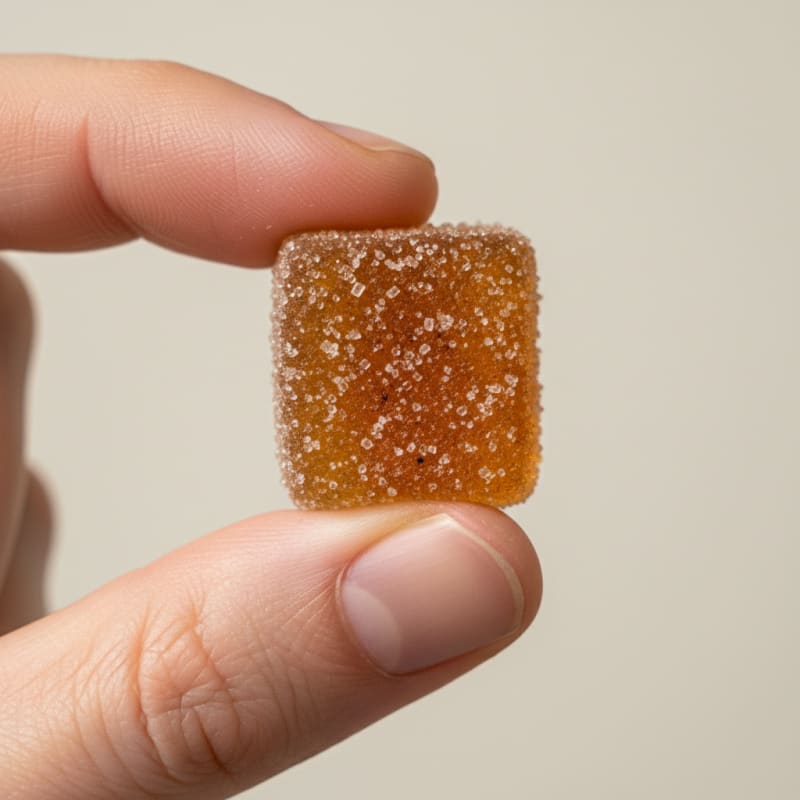
Likewise, the expected outcomes are different. The dramatic, life-altering breakthroughs reported in clinical trials are a product of intense, high-dose sessions. Microdosing offers more subtle, gradual benefits that accumulate over time. Holding it to the standard of psilocybin-assisted therapy is a category error. To manage a personal regimen effectively, understanding the inputs is key; knowing how potency is measured and ensuring products provide consistent amounts is a pillar of responsible use. Products like Orbit Gummies are designed for this purpose, offering a familiar format where the dose is standardized in every piece.
The language we use to discuss psilocybin has not kept pace with its actual patterns of use. While the research community continues to build a powerful case for psilocybin as a therapeutic tool in controlled settings, millions of people are quietly defining its primary role as a wellness supplement for daily life.

ShroomDash Editorial Team
Published 2026-04-08 · 4 min read read · Dosing