
Psilocybin for Smoking Cessation: How It Works
Quick Summary
Psilocybin-assisted therapy is being studied as a way to treat nicotine addiction. In clinical trials, a few high doses of psilocybin combined with psychotherapy have helped a significant number of people quit smoking long-term. This approach is different from microdosing and targets the psychological roots of addiction.


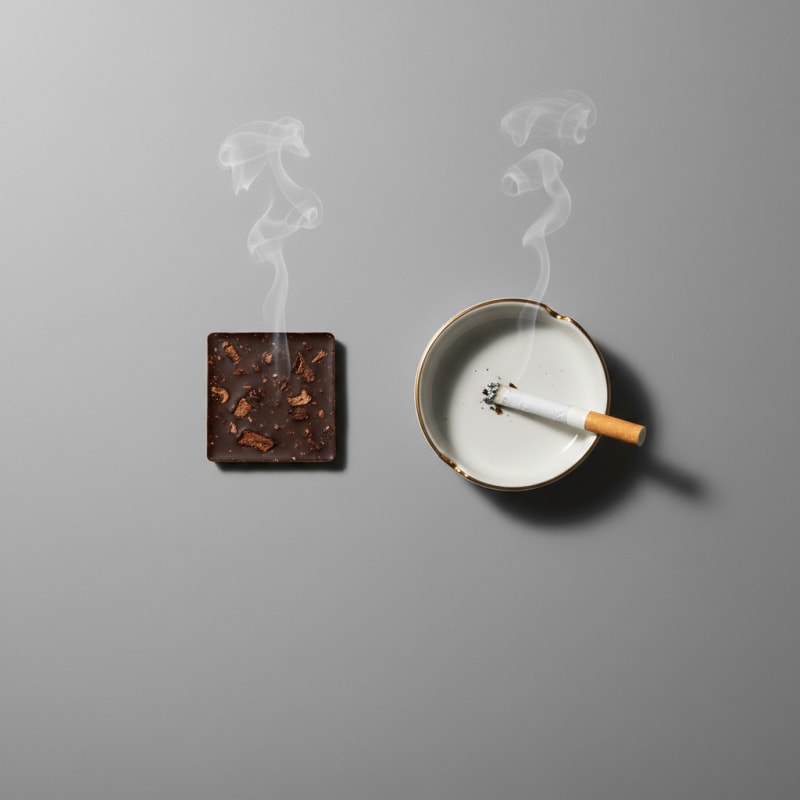
Nicotine addiction is one of the most difficult habits to break. Millions of people struggle to quit smoking, often trying numerous methods with limited success. While traditional approaches like nicotine replacement therapy have helped some, their efficacy is limited. In recent years, a surprising but powerful new tool has emerged from clinical research: psilocybin-assisted therapy.
Studies from respected institutions, including Johns Hopkins University, are revealing that psilocybin, the active compound in psychoactive mushrooms, can be remarkably effective in helping people quit smoking. This approach, however, is not as simple as taking mushrooms. It is a structured, professionally guided process that targets the deep-seated psychological patterns of addiction, rather than just the chemical dependency.
How Does Psilocybin-Assisted Smoking Cessation Work?
The protocols used in clinical trials for smoking cessation are intensive and methodical. They do not involve microdosing or recreational use. Instead, the process is built around one to three high-dose psilocybin sessions integrated within a comprehensive program of cognitive-behavioral therapy (CBT).
Participants engage in several preparatory therapy sessions before ever receiving psilocybin. These sessions are crucial for building trust with the therapists and establishing a framework for the experience. The importance of a safe, controlled environment—a core principle of why set and setting matter with psilocybin—is paramount. The psilocybin sessions themselves last for several hours and are conducted in a comfortable, living-room-like setting, with participants lying on a couch, wearing eyeshades, and listening to a curated music playlist, all under the direct supervision of two trained facilitators.
The goal is to facilitate a "mystical" or "peak" experience, which is often characterized by:
A sense of unity or interconnectedness A feeling of sacredness and awe Deeply felt positive mood Transcendence of time and space A sense of ineffability—the experience being beyond words
Following the psilocybin sessions, participants undergo further "integration" therapy. These sessions help them make sense of their experience, process the insights gained, and translate them into lasting behavioral change. The powerful insights from the psilocybin experience often provide a new perspective on one’s life, values, and the self-destructive nature of addiction, creating a profound motivation to quit.
What Does the Research Actually Show?
The results from early-stage psilocybin research for nicotine addiction have been compelling. An initial pilot study published by Johns Hopkins researchers found that 80% of participants were biologically confirmed as abstinent from smoking at a 6-month follow-up. In a more recent, larger randomized controlled trial comparing psilocybin therapy to traditional nicotine patch therapy, the psilocybin group again showed significantly higher rates of abstinence.
Researchers believe this approach works by fundamentally disrupting the rigid thought patterns and narratives that underpin addiction. Psilocybin is known to increase neuroplasticity—the brain’s ability to form new neural connections. This neurological "reboot" can create a window of opportunity where entrenched habits can be more easily broken and replaced with healthier ones. Unlike nicotine patches, which only manage withdrawal symptoms, psilocybin therapy appears to address the psychological and spiritual dimensions of addiction, helping a person re-evaluate their relationship with themselves and the substance.
To ensure dosing is precise, clinical trials use carefully prepared and measured psilocybin. For those exploring psilocybin outside of a clinical setting, product formats that allow for accurate dosing are essential. Products like ShroomDash 100mg Psilocybin Microdose Capsules offer a consistent, measurable amount of psilocybin, removing the guesswork associated with raw mushrooms and allowing for precise dose management. You can browse our full selection of precisely dosed products in our capsules category.
How Is This Different From Microdosing?
It is critical to distinguish between the high-dose clinical protocol for smoking cessation and the popular practice of microdosing. As recent surveys show, microdosing is now a very common practice, but its aims and methods are entirely different. A microdose is a sub-perceptual dose—typically 5% to 10% of a full psychoactive dose—taken every few days. The goal of a practical microdosing regimen is to enhance mood, creativity, or focus without producing an altered state of consciousness.
While some users report success in breaking minor habits through microdosing, the dramatic, life-altering shifts seen in smoking cessation studies are specifically linked to the profound nature of the high-dose experience. The therapeutic breakthrough comes from the intense, introspective journey, not the subtle, day-to-day effects of a microdose. For those looking to explore the flavour and format of psilocybin edibles, Wonder - Magic Mushroom Infused Gummies offer a tasty, pre-measured option that provides consistency whether you are exploring low doses or building up to a larger one. You can find these and other edibles in our gummies category.
The psilocybin-assisted therapy model provides a novel framework for addiction treatment by targeting the psychological core of the issue, rather than just its surface-level symptoms. The use of psilocybin to treat nicotine addiction remains investigational, but the high rates of success in early studies suggest it addresses the psychological aspects of addiction in a way that conventional treatments do not.

ShroomDash Editorial Team
Published 2026-03-11 · 4 min read read · Lab Science