
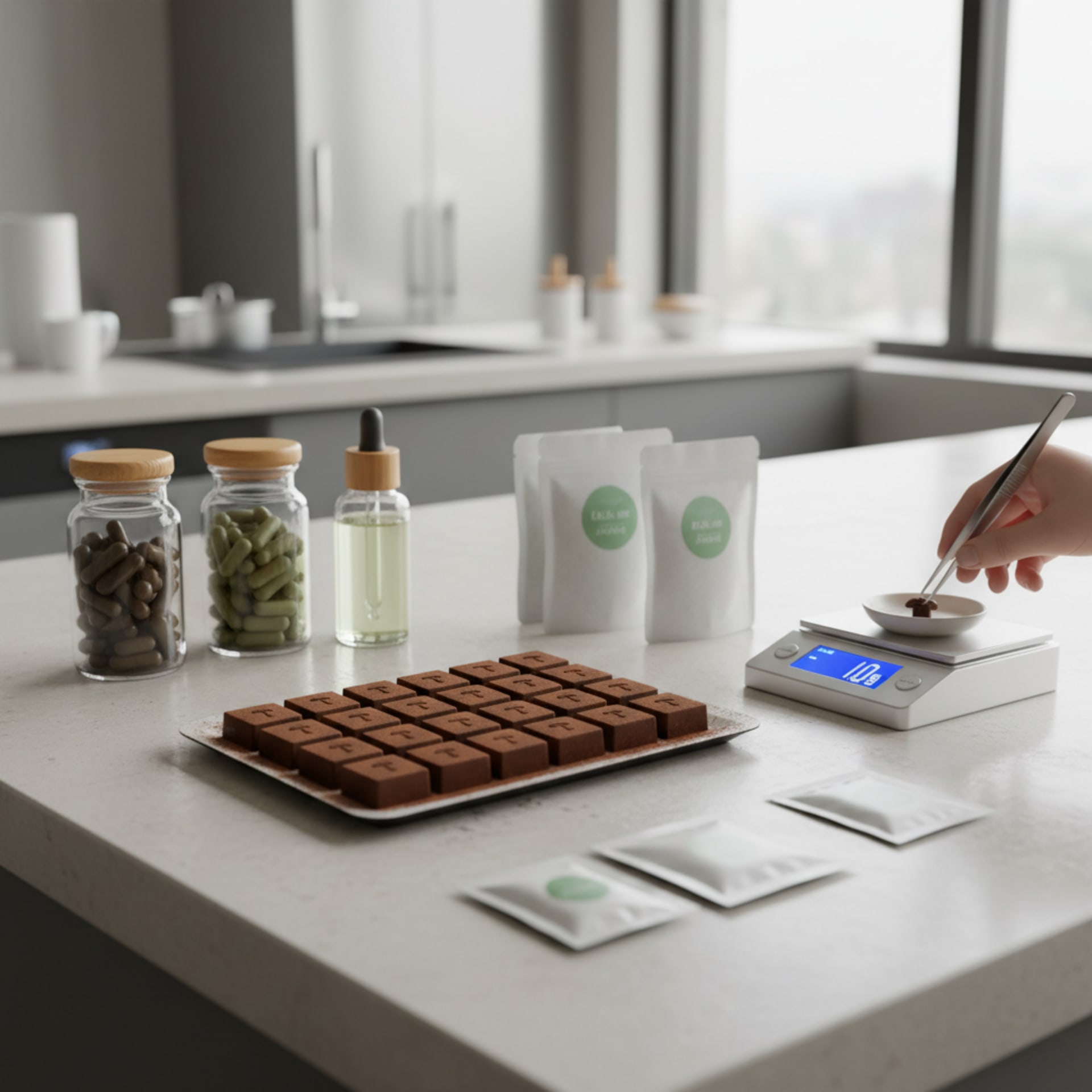
What "Precise Dosing" Really Means in Edibles
Quick Summary
Precise dosing requires two controls: consistent weight per segment and known potency per gram from lab testing. Without both, dosing claims are assumptions, not measurements.
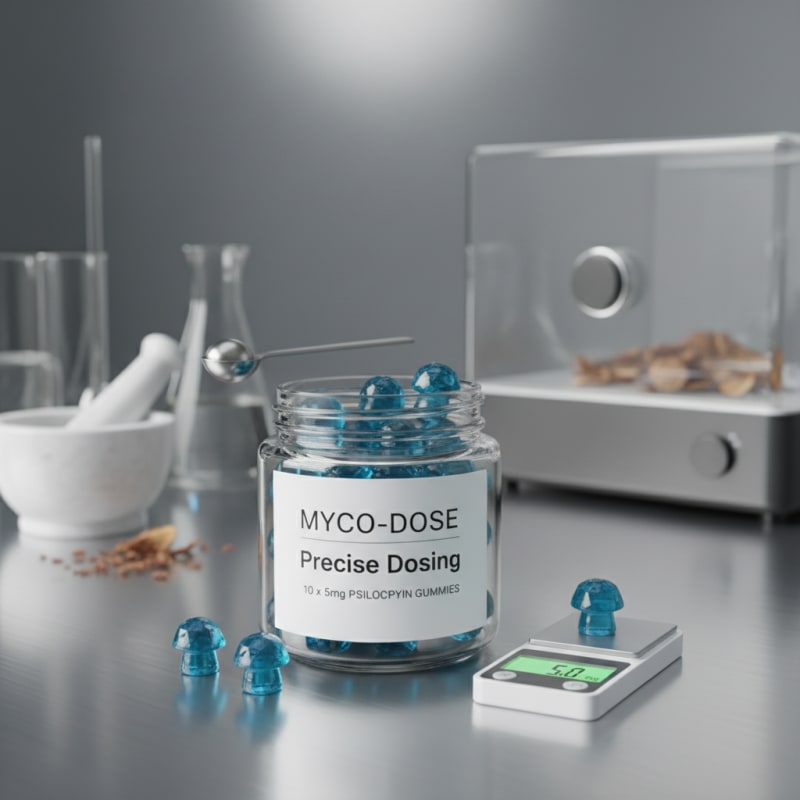

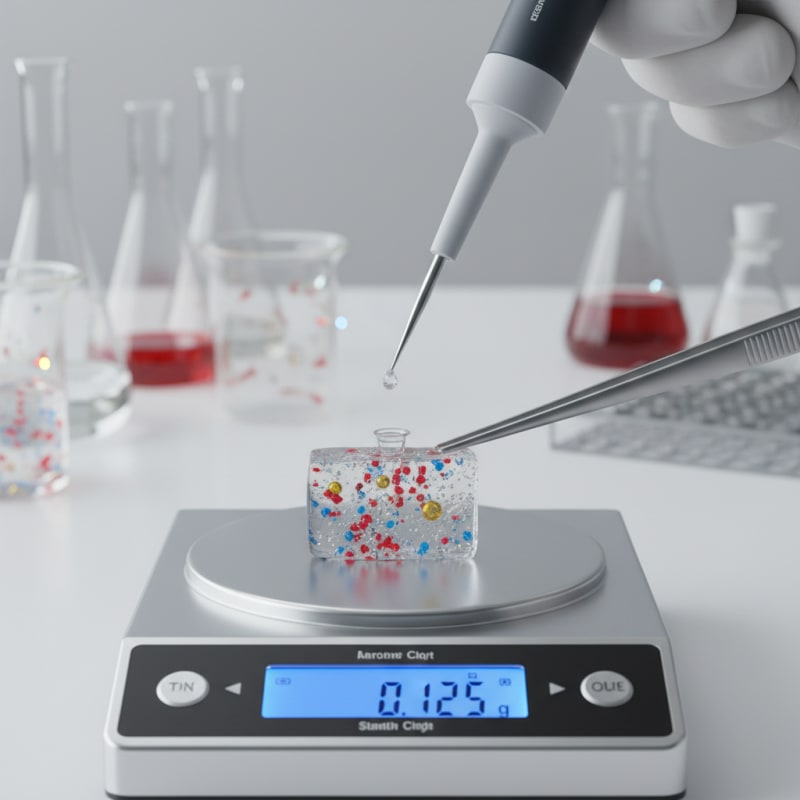
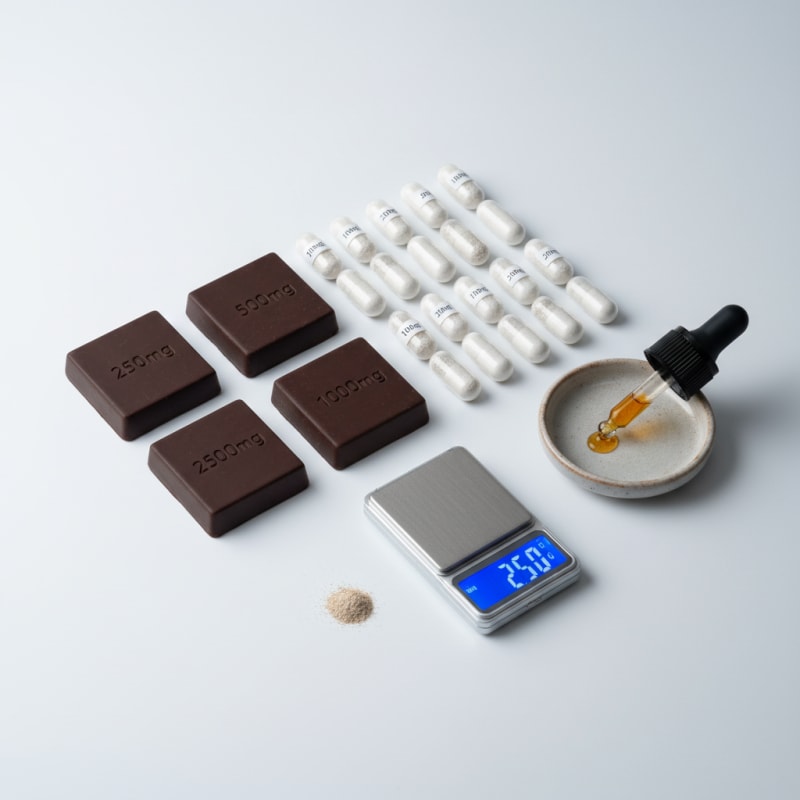
"Evenly dosed."
You see it on chocolate bars. On gummies. On capsules.
The phrase sounds simple. It usually isn''t.
What Causes Distribution Variance?
| Format | Weight control | Distribution method | Primary risk |
|---|---|---|---|
| Capsules | Measured per shell | Ground & blended powder | Incomplete homogenization |
| Chocolate bars | Mold segmentation | Blended into melted base | Uneven mixing before molding |
| Gummies | Per-unit liquid pour | Dissolved/mixed in base | Settling during setting |
| Dried mushrooms | Manual weighing | None (whole material) | Natural potency variation |
When dried mushrooms are used in edibles, they are first ground into powder. If they are not ground thoroughly and mixed correctly, the active compounds can cluster unevenly. That means one square of chocolate could contain significantly more psilocybin than another, even if both weigh the same.
That problem is called distribution variance.
The only way to reduce it is through full homogenization. The dried material must be finely milled. Then it must be blended into the edible base in a way that ensures even dispersion before portioning.
How Does Chocolate Production Handle It?
In chocolate production, this often means mixing the powdered material into melted chocolate under controlled conditions, then pouring into molds designed for equal segmentation. If the bar is labeled as 3.5 grams total across 12 squares, that implies approximately 0.29 grams per square. But that number only holds if the material was mixed evenly before molding.
How Do Gummies Compare?
Gummies follow a similar principle. The active material is mixed into a liquid base before setting. Inconsistent mixing produces inconsistent pieces.
Are Capsules More Reliable?
Capsules are simpler mechanically. The ground material is mixed and then filled into measured capsule shells. A capsule labeled 0.2 grams should contain 0.2 grams of blended material, not fragments of whole mushrooms placed randomly into shells.
Even dosing does not mean identical molecular distribution in every single piece. Biological material always carries some natural variance. It means the manufacturer took steps to reduce that variance to a controlled range.
Without homogenization, segmentation means nothing.
The Potency Layer
There is also a second layer people rarely consider. Potency per gram varies between batches. If a chocolate bar contains 3.5 grams of dried material, but that material tests at 6 milligrams of psilocybin per gram in one batch and 10 milligrams per gram in another, the chemical strength of the bar changes even if the weight does not.
This is where lab testing becomes essential — not as a marketing badge, but as a measurement step that determines the actual chemical content of a batch before it is portioned.
Precise dosing requires two controls:
- Controlled weight per segment
- Known potency per gram
If one of those is missing, precision becomes an assumption.
Where Inconsistency Begins
In practice, most inconsistency complaints trace back to one of those two failures. The same dynamic applies whether the product is a chocolate bar, a capsule, or a gummy.
Understanding how dosing interacts with experience intensity depends on whether the stated dose is reliable in the first place.
The product format is not the issue. The mixing process is.

ShroomDash Editorial Team
Published 2026-02-17 · 7 min read · Dosing