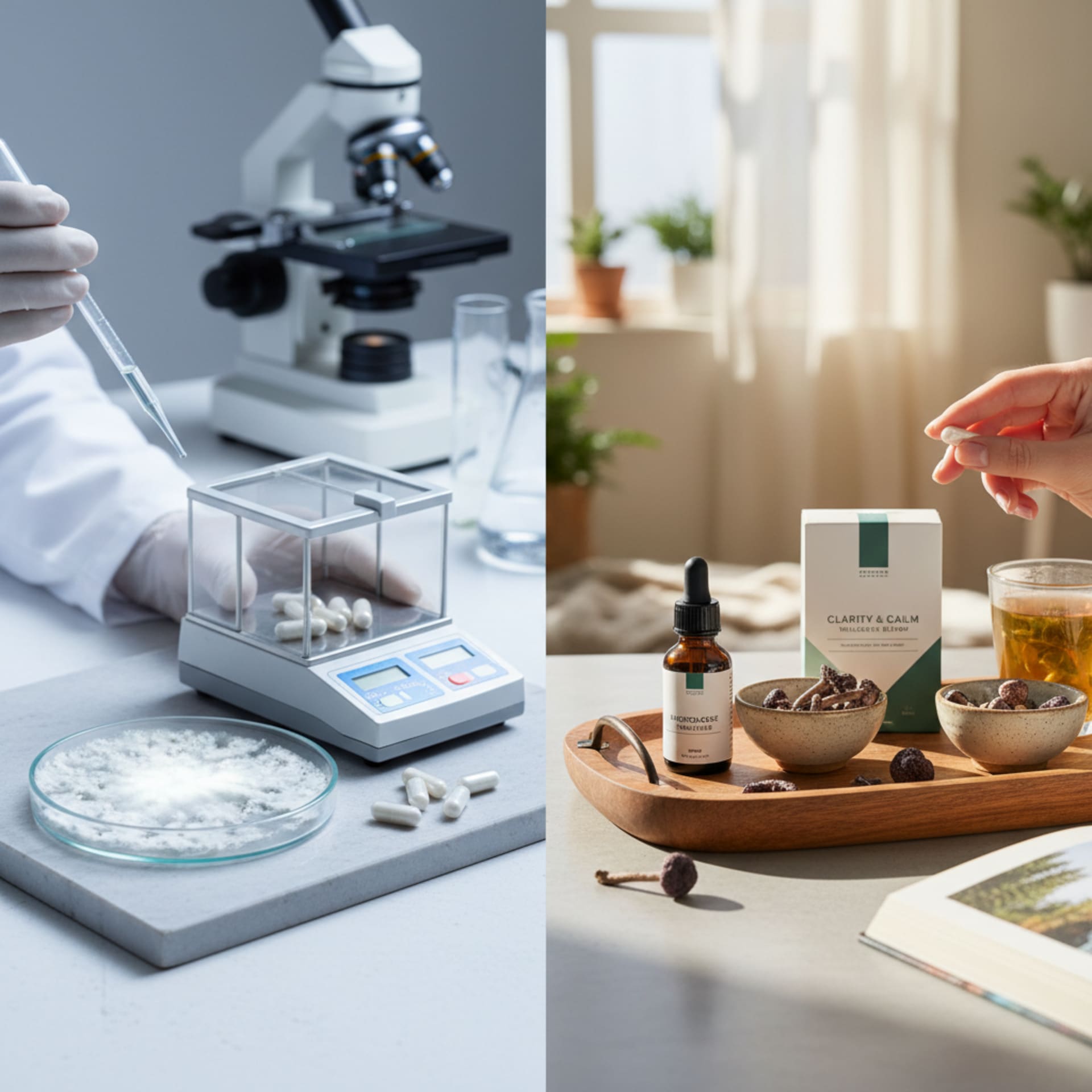
Clinical vs. Wellness: Two Psilocybin Models
Quick Summary
Most media on psilocybin focuses on high-dose clinical trials for treating specific conditions. However, new survey data reveals that the vast majority of real-world psilocybin use involves low, sub-perceptual doses for general wellness. These two distinct models—clinical and wellness—serve different purposes and have different risk profiles.


Recent data from a 2026 RAND study highlights a significant fact: psilocybin use is far more common than previously understood, with an estimated 11 million U.S. adults partaking in 2025. The report also surfaced a crucial detail about *how they are using it. Nearly half of all psilocybin consumption days involved microdosing, the practice of taking a small, sub-perceptual amount.
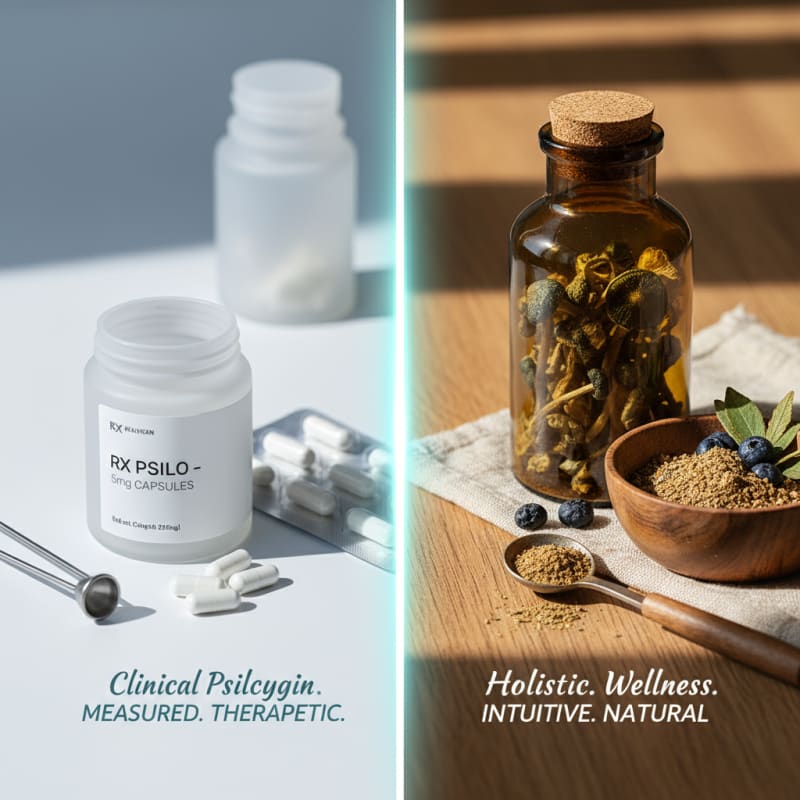
This reality stands in stark contrast to the dominant media narrative, which tends to focus on high-dose, medically supervised psychedelic-assisted therapy. Prestigious institutions like the Johns Hopkins Center for Psychedelic and Consciousness Research are making incredible strides, but their work represents just one approach. The data reveals that two distinct models of psilocybin use are operating in parallel: the clinical model and the wellness model. Understanding the distinction is key to accurately grasping the modern psilocybin landscape.
What Is the Clinical Model of Psilocybin Use?
The clinical model is what most people picture when they hear about "psilocybin therapy." It is a highly structured, medically supervised paradigm designed to treat specific, often severe, health conditions. This research, conducted in controlled environments, is building the foundational evidence for psilocybin's therapeutic potential.
Key characteristics of the clinical model include:
- High Doses: This model almost exclusively uses macrodoses, which are large enough to induce a powerful psychoactive experience, often lasting several hours. The goal is often to facilitate a mystical or breakthrough experience that can shift a patient's perspective on their illness.
- Screened Participants: Clinical trials involve rigorous screening. Participants are typically physically and psychologically healthy (aside from the condition being studied) to minimize risks. They are prepared for the experience and supervised throughout by trained medical professionals and therapists.
- Therapeutic Goals: Research is targeted at specific, diagnosable conditions. Studies have shown promise for treatment-resistant depression, end-of-life anxiety in cancer patients, and smoking cessation.
- Controlled Setting: The concept of "set and setting" is paramount. Sessions occur in a safe, comfortable, and aesthetically pleasing clinical environment designed to be reassuring and minimize the chance of a negative experience.
This model is resource-intensive, requiring trained staff and medical facilities. It is yielding critical data on safety and efficacy, but it is not representative of how the vast majority of people use psilocybin today.
What Is the Wellness Model of Psilocybin Use?
The wellness model is the de facto reality of psilocybin use for millions of people. It is a self-directed, at-home approach focused on general quality of life improvements rather than treating a specific pathology. The RAND study confirms this is not a niche activity; it constitutes the bulk of psilocybin consumption.
This model is defined by:
- Low Doses: The wellness model is dominated by microdosing. Users take a fraction of a recreational dose with the express intention of *not producing an altered state of consciousness. The goal is subtle, sub-perceptual effects. For those seeking a gentle but noticeable effect, precisely dosed edibles like our Sparkle Gummies offer a predictable and approachable format.
- Self-Directed Use: Individuals manage their own dose, frequency, and schedule based on personal goals and observations. This autonomy is a core feature, allowing integration into daily life without disruption. Many users follow established protocols, as outlined in guides like Common Microdosing Schedules Explained.
- Broad Wellness Goals: Users are not trying to cure a disease but to enhance their lives. Reported benefits include improved mood, increased creativity, better focus, and enhanced social connection. It's about optimization rather than treatment.
- Real-World Setting: Psilocybin is integrated into daily routines—at home, at work, or during social activities. This requires products that offer precision and discretion, which is why precisely measured products like Clarity Microdose Capsules are a cornerstone of this model. You can find these options in our capsules shop.
This grassroots movement is essentially a massive, informal study. While it lacks the controlled data of a clinical trial, its sheer scale provides compelling anecdotal evidence about psilocybin's role as a wellness tool.
Why Are These Models So Different?
The divergence between the clinical and wellness models comes down to purpose and accessibility. One is a medical intervention, the other is a personal wellness practice. The clinical model is necessarily slow, cautious, and methodical to establish a new medical treatment. The wellness model is dynamic and consumer-driven, responding to a public desire for accessible tools to improve well-being.
Accessibility is perhaps the biggest factor. Gaining entry into a clinical trial is extremely difficult. In contrast, the wellness market provides direct access to products that people can explore on their own terms. As the legal landscape evolves, more people may gain access to a wider variety of psilocybin products.
The goals are fundamentally different. A clinical trial seeks to prove that psilocybin is a safe and effective treatment for a specific illness to meet regulatory standards. A wellness user seeks to answer a simpler question: can this product improve my personal quality of life?
Do These Two Models Conflict?
The two models are not in conflict; they are different tools for different jobs. The rigorous, data-driven clinical model provides the scientific legitimacy and safety information that de-risks and destigmatizes the compound. This work is essential for changing laws and public perception.
The widespread wellness model drives innovation in product development and demonstrates the various ways psilocybin can be integrated into a person's life. It provides a real-world counterpoint to the necessarily sterile environment of a lab, showing how millions of people have already incorporated psilocybin into their lives safely and effectively.
The findings from formal clinical research can help inform safer and more effective use within the wellness model. Conversely, the trends and outcomes observed in the wellness space can provide researchers with new hypotheses to test in controlled clinical settings.
Both models are contributing to a more nuanced and complete understanding of psilocybin. The data shows that use is already widespread, and the conversation is now expanding to include both the profound potential of high-dose therapy and the practical reality of low-dose wellness.

ShroomDash Editorial Team
Published 2026-04-09 · 4 min read read · Lab Science